Drones are one of the most rapidly advancing technologies which are currently disrupting industries across the world. There are hundreds of drone manufacturers vying for business across the leisure and commercial market, with household names such as Parrot and Go-Pro now getting in on the act. But how do you go about choosing a drone that is right for you and your business?
Choosing the right drone is crucial when looking to get the most out of UAV technologies for specific commercial tasks. The set up alone can run into thousands, let alone the additional training and time spent learning how to use the equipment and necessary software. To ensure that you can demonstrate not only a credible return on investment but also the anticipated commercial benefits (improved efficiencies, more accurate data etc.) you need to consider the where’s, why’s and how’s.
Questions to ask yourself when choosing a drone
Choosing the right drone can seem overwhelmingly complicated. Which camera is best? How much weight will it carry? Will it fly in the rain? How much should I spend? – these are just some of the questions that are probably running around in your head.
When looking to integrate UAV technology into your business, it is critical to first assess the jobs you want to carry out and the results you want to achieve. If you are a burgeoning cinematographer who wants ultra-high-resolution video footage, then your camera needs will be different to a surveyor who wants to carry out building surveys.
Before you commit budget and resource. ask yourself these questions:
Where will you be using the drone?
If you are intending to fly in exposed areas such as coastlines, or the open countryside, you need to consider the wind as a factor. Although most drones can fly in conditions in excess of the wind speed quoted, imagery can become distorted and drones can veer off course. Choose a drone with a high wind speed rating so that you can be assured your imagery is as clear as possible and that you don’t lose your precious investment in a strong gust!
If you are considering using your drone in confined spaces then there are even more things to consider, size, collision tolerance and most importantly the safety of the operator and other people who may be in the area.
Flyability are a Swiss company who have revolutionized the way drones can now be used in restricted environments. It may look like something out of Star Wars, but the Elios drone is one of a kind when it comes to choosing a drone to survey in close quarters. It has onboard lighting and is collision tolerant up to 15 km/h. It also has the capability for live video feed for BVLOS (Beyond Visual Line of Sight) applications or where visibility is low.
What information do you need to acquire?
The answer to this question will tell you more about which drone you should choose than anything else. It will dictate the camera you need, the battery capacity/flight time, payload limit and the software you will need to use.
If you are looking to shoot a high-definition video for film and TV, you will need a professional, stable camera and drone. The camera on the DJI Phantom 4 Pro boasts capabilities of 4K and 60fps. At under £1500, this is a great option for those just starting out.
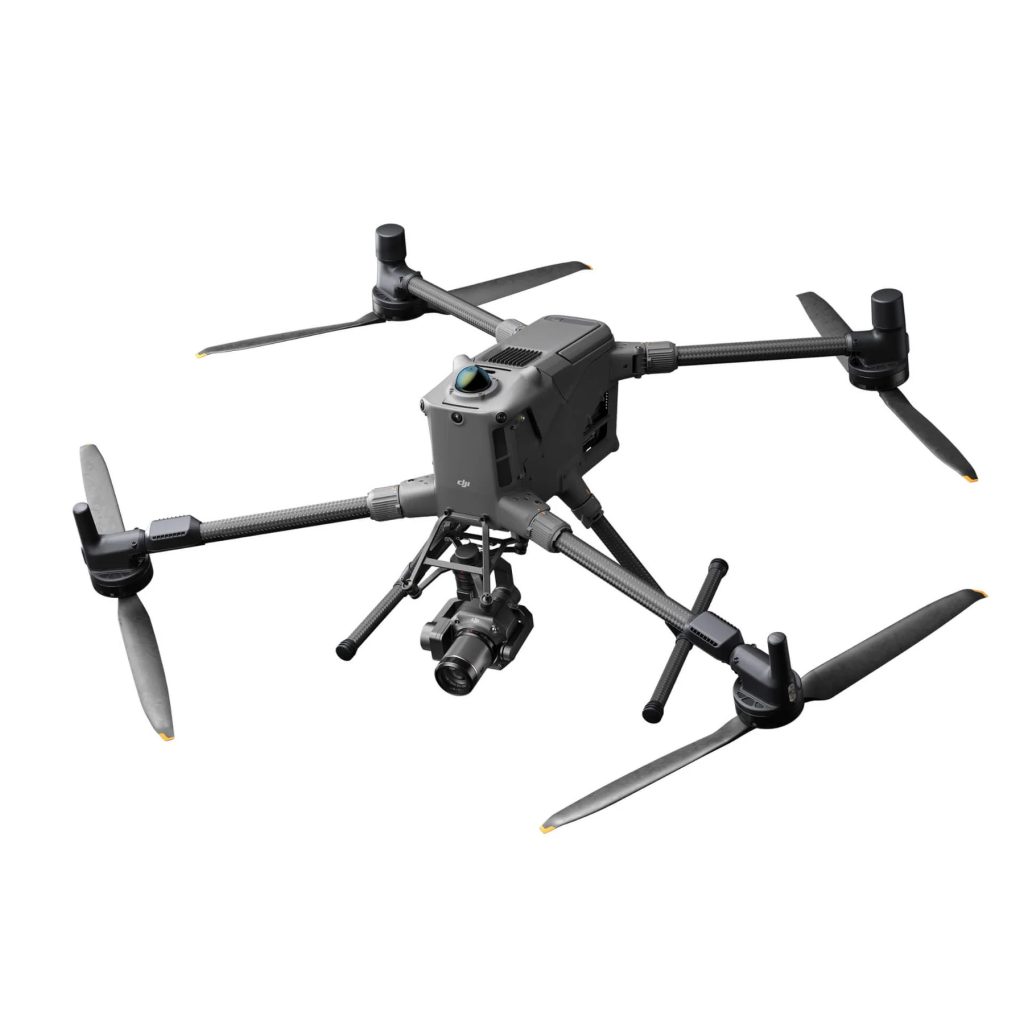
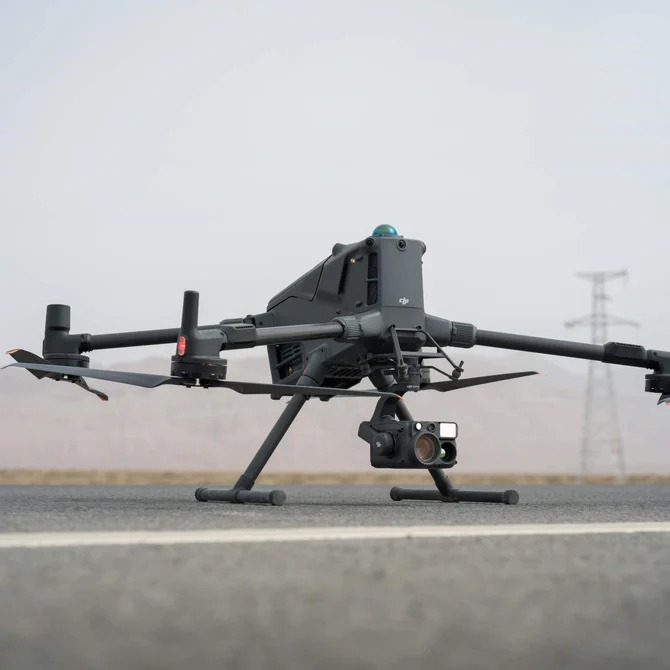
For applications such as visual inspections and surveys, a greater emphasis should be placed on precision and accuracy. Precision is the accuracy of the resulting measurements in your data and accuracy is the position on the earth in relation to global coordinate systems. The new Matrice 210 RTK has been designed specifically for the surveying market and provides positioning accuracy of under 1cm for survey-grade results, without the need for ground control points. The D-RTK navigation and global positioning system is a ground-breaking feature which is unavailable on any other drone on the market.
The Matrice 200 has an IP43 rating, a thermal and zoom camera and also operates effectively in difficult weather conditions. It can fly in the rain and is resistant to small particles such as dust which can be invaluable when deploying a drone for search and rescue missions.
How much weight do you need to carry?
When it comes to choosing a drone based on payload limit, size really matters. Payloads are the weight that a drone can carry and cover anything other than the drone itself – camera, sensors and even packages for delivery. The answer to the previous question will probably help you to determine the payload capacity you need.
The higher the payload limit, the more flexibility you have for future-proofing your drone. You may only think you need a standard camera right now, but at some stage, you may want to upgrade to a dual thermal camera or add more sensors and GPS to improve the accuracy of your data. The more options you give yourself at this stage can help you to integrate different services into your offering in future.
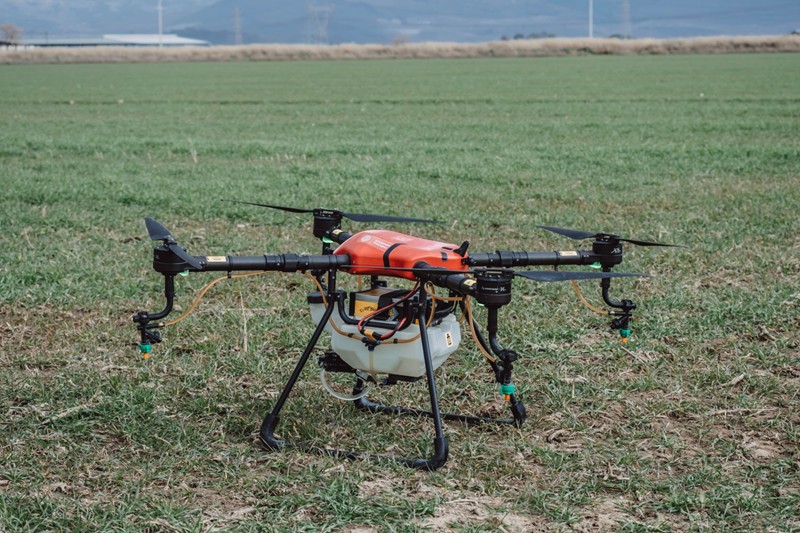
For the most flexibility and more experienced operators, the six-rotor DJI M600 is a beast when it comes to payload capacity. It boasts a massive 6KG flexible payload limit, with video capabilities of over 4K and full HD video downlink at 1080p. This is the drone of choice when looking to integrate heavier sensors, such as LiDAR systems or thermal imaging cameras. If your data needs go further than photo and video, talk to us about the extreme capabilities of the M600.
How long and how far do you need to be able to fly?
The main restricting factors here are the drones radio range and the battery life. In the UK, you are limited to a range of 500m in visual line of sight and most drones can achieve this comfortably. However, in some situations where there can be interference from telephone masts, large structures, power lines etc. This can interfere with your signal so more robust system is required. It is also essential when working on third-party sites to have a reliable return to home function. Set this at a safe height above obstructions and ensure this is registered and saved in the drone before take-off.
When it comes to choosing a drone for commercial projects, you cannot afford to economize on flight time. Battery life differs greatly between recreational models and drones suitable for commercial use so and obviously, the more time you can be in the air without changing batteries, the more information you can collect and the more jobs you can fit into a day. In our recent Commercial Drone Survey, nearly 30% of respondents said that flight time was their most important consideration when choosing a commercial drone.
Tethers are essentially ruggedized external generator packs which are ideal for continuous monitoring applications such as law and traffic enforcement. They allow for continuous aerial observation, without any downtime.
There have been great advances in tether technology, however, models which can be used with a tether are currently limited to the DJI Inspire, the DJI M600, the Acecore NEO & ZOE and the Aerialtronics Zenith.
Protecting Your Investment
Choosing a drone for commercial use represents a significant investment for any business. Not just in monetary terms, but also in time spent on building the initial business case, training your operators and selling the concept to your clients. In most cases, you will be using your UAV to perform services on behalf of others, so it is critical that you choose a drone which will allow you to expand and grow your business as and when needed.
If you are looking to leverage this exciting and expansive technology within your business, we can help you to get it right first time. We specialise in helping companies to integrate UAV technology into their everyday business – with dramatic improvements inefficiencies. Get in touch with our commercial drone specialists for free advice and support.

Download Our FREE RPC-L1 Guide
Understand everything you need to know about moving towards commercial drone operations with our RPC-L1 guide.
- Understand what RPC-L1 is and who it is for
- Learn how the CAA transition impacts operators and training routes
- Get a clear breakdown of requirements, costs and next steps
Related Posts

Anti-drone technology. Why it’s become essential for airports
With the pronounced rise in drone popularity over the past few years has come an extra responsibility to control the skies above us. Drone detection solutions have become important for this purpose, offering the ability to not only detect drones over a wide distance but also access a variety of potentially vital information such as […]
CAA Drone Flight Test: What to expect on the day
COPTRZ is the UK’s leading CAA approved NQE, delivering permission for commercial operations (PfCO) training courses at 12 locations across the UK. The drone flight test is a fundamental part of the course and this article aims to give you a quick overview of what you can expect on the day. There are three main sections to […]

DJI Government Edition – Data Protection for Drones
It’s an announcement that might have slipped a few people by, but the DJI Government Edition could be a notable step in the safety and security of high-level drone operations. In short, it’s about providing quality data protection at the highest level, with DJI handing full control of its drones and the data they capture […]