Which one is going to win?
With drones being used in ever-more demanding surveying and inspection situations, we’ve seen a variety of excellent solutions to suit all needs. One such system is Flyability’s Elios 2, it delivers many notable upgrades of the original ground-breaking model and is ready to fly into those places that only the most assured of pilots would even consider taking any other craft. Flyability recently announced the Elios 2 RAD, which has all of the benefits of Elios 2, with remote radiation detection capabilities on top.
Elios 2 Confined Space Inspection Drone
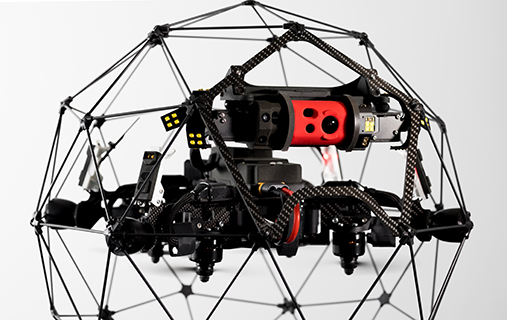
The Elios is designed specifically for use in enclosed or confined spaces. Its spherical carbon fibre caged frame is described as “collision tolerant” and enables it to bounce safely off objects as it navigates through the likes of pipe networks, tunnels, darkened interiors and so on. Furthermore, the cage also reduces the risks to the drone itself, and subsequently that all-important data.
So when such great success stories come around, it’s not unusual to find companies looking to get a slice of the action – and usually on a budget. You only need to look at the flood of knock-offs coming along whenever DJI launches something new. That’s not to say there aren’t great third-party products out there, far from it. But, when it comes to delivering high-quality and professional results, then you’re usually much better off working with the best possible products that were built specifically for the task in hand.
The Cheap Fix

One recently announced example is safety cage designed for use across DJI’s Mavic 2 Series. As a cheap and cheerful addition to your fleet, adding a cage to any of those craft for a small price might not seem like a bad idea, much like many of you will have used prop guards in the past. Certainly, anything that makes your craft safer and your flights less prone to potential risk or damage is no bad thing.
However, the drone inside the cage remains the same. So, to claim that such an add-on would suddenly make your Mavic 2 Pro suitable for close-quarters inspection work can be dangerous, to say the least. It’s like wrapping an egg in rubber and calling it a bouncy ball – it might not crack if you drop it once but that egg is still going to smash if you start bouncing it around.
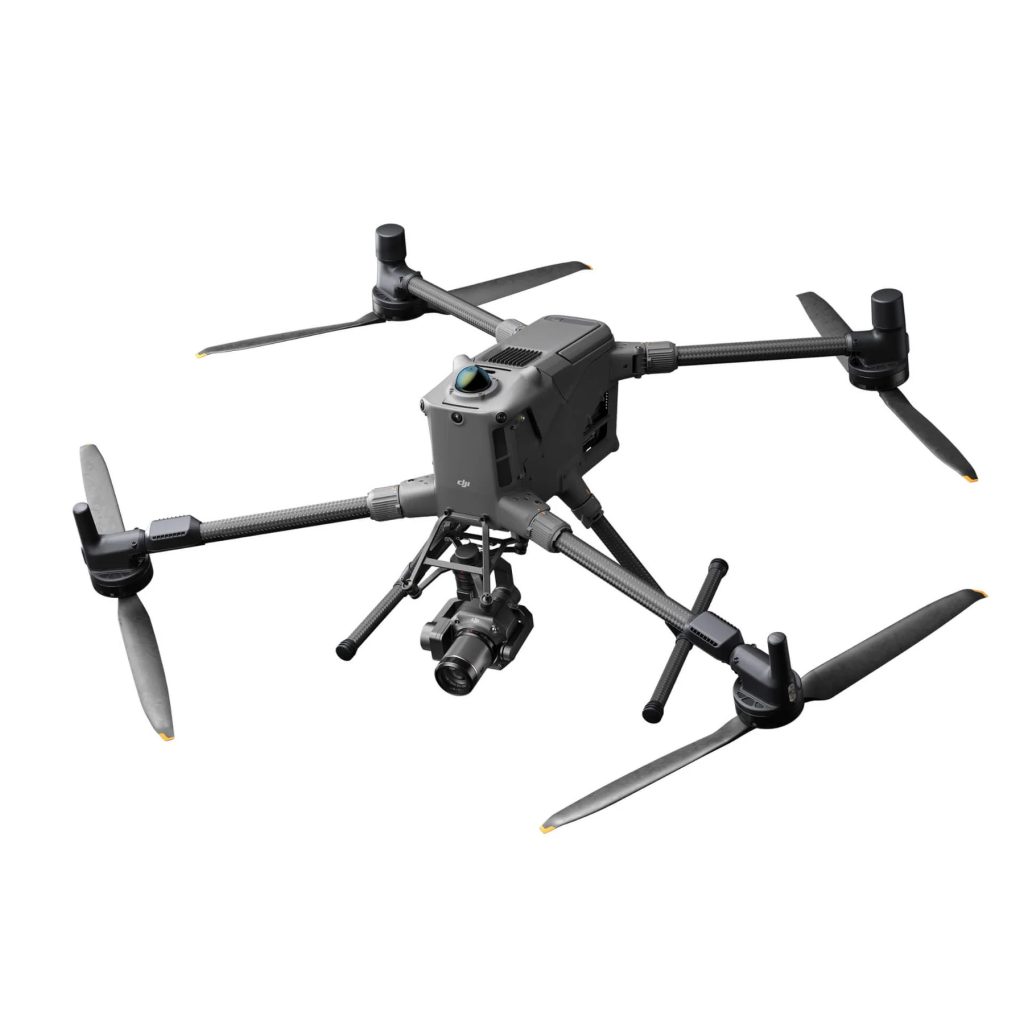
The likes of the Mavic 2, and especially its Enterprise and Enterprise Dual variants, make for great surveying solutions if you’re working outdoors. They’re highly manoeuvrable and adaptable to most situations. However, you’d need a highly skilled and somewhat brave pilot to even consider taking it into the kind of areas that the Elios 2 was purpose-built for.
Likewise, a lot of the other benefits being touted for this new cage are mainly directed at the drones themselves. Sure the Mavic 2 Pro has a brilliant 20MP camera which makes it great for aerial photography and inspection work – compared to the Elios 2 and its 12.3MP camera. But still, we wouldn’t advise sending a Pro down a tight mine shaft or the darkened foundations of a construction site.
The Mavic 2 Enterprise Dual has similar thermal and visual camera set-up to the Elios 2. Wrapping that up in a third-party cage does give you some extra scope for operating in low-light conditions. But, again, it’s not built for the job. Meanwhile, the Elios 2 boasts a 10,000 lumens lighting system, can operate in GPS-free environments and also has dustproof lighting so it can cut through the blurry haze of the dust and debris. At best, the Mavic 2 Enterprise can add a 2,400 Spotlight – at an additional cost it should be added – which again is a handy tool for several situations, but not specifically designed for close-quarters inspection work.
The aforementioned features also make the Elios 2 great for the operators working in those hard-to-reach places. Those operators are typically flying with the first-person viewpoint, therefore they need the clearest possible picture to see where they’re heading. After all, if we’re talking about areas that aren’t safe for most drones to operate in, they’re hardly likely to be hospitable for the pilots.
The Pros and Cons

There are almost certainly bound to be some drawbacks when considering cheaper products that aren’t manufactured by the same experienced professionals who design their craft for such specific tasks. In this instance, there are several factors that would actually make your Mavic 2 perform less efficiently than it would in its original form.
For one, the added weight of the frame halves the flight times. So while the Mavic 2 Series can top out at around 30 minutes, that would be reduced to just 15 with the cage fitted, which is a lot when you’re talking efficiency. It’s worth noting that this is still a little longer than the Elios 2 but you’re pushing the craft that much harder than it’s accustomed to – whereas the Elios 2 was very much built with its protective frame as part of the system.
Perhaps most striking is that fitting a third-party cage in this instance requires the Mavic 2’s obstacle sensing technology to be turned off. This means that the excellent technology that DJI has packed into each of its craft to enable you to operate safely when flying close to objects has to be disabled. This seems largely counter-intuitive because if you’ve got the technology in place to avoid an object, surely that’s better than hitting it?
Flyability designed the Elios 2 to operate in places where you may well not have the luxury of a three or four metre gap to the obstacles around you. With seven stability sensors and an improved Attitude mode to stay level with the natural horizon, the Elios 2 combines enhanced reversibility motors to adjust to any bumps in a near-seamless manner, automatically correcting itself and maintaining a smooth flight so that your footage (and the all-important data) remains as clear and accurate as possible.
We can’t imagine that DJI built its Mavic 2 craft with ‘bounceability’ being a key factor and while we’d feel a little awkward even trying to see how one would react to being wrapped up in a frame and dropped through a manhole cover. It will be interesting to see how both the drone and the footage are adversely affected when repeatedly coming into collision with metal pipes, wooden beams and so on.
The Winner
You get what you pay for. It’s a cliché, but it’s true. If you buy something because it’s cheap then you have to expect that it’s going to do an inferior job – especially if the drone inside it wasn’t built for that specific job in the first place. Sure, if you’re only planning on doing one or two close-quarters inspections as a side-dish to hundreds of more open, outdoor operations then a quick fix might be all you need. However, if you’re a professional aerial operator looking to conduct multiple high-quality surveys in confined spaces or cramped interiors, then it will better to choose a high-end system that’s built for the task in hand.
Plus, the likes of the Elios 2 come with a host of extras further designed to get the best possible results. In this instance, the model also boasts an oblique lighting system that can not only see, but will actively detect, those tiny crevices that might indicate the beginnings of a crack inside a pipe or a small ridge that could lead to a build-up and ultimately blockage. It also has a distance lock feature which enables you to fly at a fixed range from 30-200cm away from a wall or other object to ensure consistently accurate results.
Although the third-party cage boasts of unobstructed views as a selling point, that was only an issue with the original Elios 1. It’s successor not only shoots cage-free footage and stills, but it can do so with a wider field of view. It has some pretty cool software, too, with the upgraded Inspection 2 package even enabling you to draw a line on your computer screen and be given an immediate 2D measurement based on the data collected in-flight, accurate to within 0.18mm/px.
So while there’s nothing wrong with picking up a cheap third-party product such as this Mavic 2-friendly cage, especially if you’re a fun flyer who doesn’t have much space to take their drone out for a few flights at the weekend. However, if you’re serious about delivering quality results in a high-end commercial or industrial scenario, then it’s not going to help deliver the kind of professional results you require and your clients will demand.
If you’re flying safely in open areas then it seems largely unnecessary, coming at the expense of the Mavic 2’s flights times and its onboard obstacle sensing technology. And if you are looking at working in close-quarters inspection conditions, then a bespoke solution such as the Elios 2 would more than likely be your drone of choice. A Mavic 2 in a cheap cage just wouldn’t offer the same kind of safety, efficiency and quality. We know it’s nearly Christmas, but putting furry antlers on your dog doesn’t make him a reindeer…
Would you like to know more?
If you want to know more about the Elios 2, get in touch with our Inspection business development manager George Burne who will help you decide if the Elios 2 is the right solution for you.
Download Our FREE RPC-L1 Guide
Understand everything you need to know about moving towards commercial drone operations with our RPC-L1 guide.
- Understand what RPC-L1 is and who it is for
- Learn how the CAA transition impacts operators and training routes
- Get a clear breakdown of requirements, costs and next steps
Related Posts
DJI Zenmuse L3 vs L2: See Through Far and True
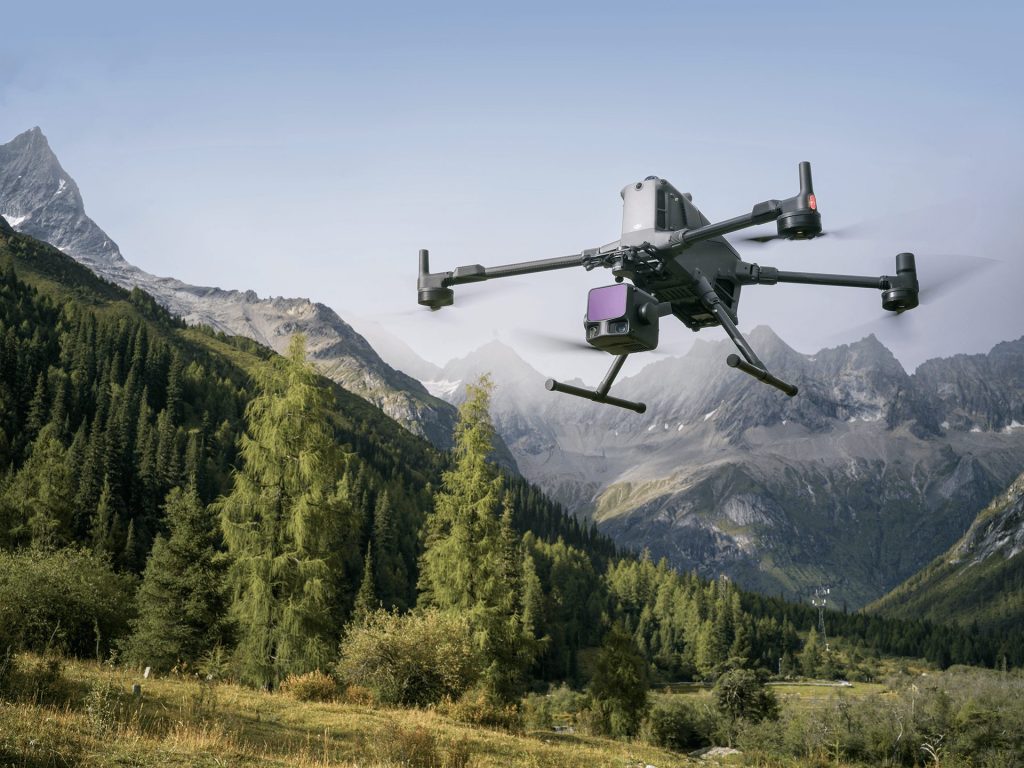
See through far and true.That’s the promise behind DJI’s latest LiDAR payload — the Zenmuse L3. As the successor to the proven DJI Zenmuse L2, this new generation builds on DJI’s reputation for precision mapping and effortless integration with enterprise workflows. Designed for surveying, construction, forestry, and infrastructure inspection, the L3 combines a next-generation laser […]

How the Elios 3 Delivers Unmatched Safety, Efficiency, and Cost Savings
In the realm of power generation, the efficiency and safety of operations are paramount. A critical component in this process is the condenser, responsible for converting steam back into water for reuse. Traditional inspection methods for condensers are often time-consuming, costly, and pose significant safety risks due to the confined and complex nature of these […]

How Drone-Based Ultrasonic Testing Enhances Safety and Efficiency
Industrial storage tanks are vital components in sectors like oil & gas and power generation. Ensuring their structural integrity is paramount, yet traditional inspection methods often involve draining tanks, manual entry, and significant downtime. Enter the Flyability Elios 3 drone equipped with an ultrasonic thickness (UT) payload—a game-changer in non-destructive testing. The Challenge Conventional tank […]