Why Choosing a DJI Authorised Repair Centre in the UK Matters
Why Choosing a DJI Authorised Repair Centre in the UK Matters
Last updated on
22nd April
Contents
Why Choosing a DJI Authorised Repair Centre in the UK Matters
When organisations invest in DJI drones, the buying decision often starts with airframes, payloads, camera capability, flight time and price. That is understandable. But in commercial use, the real test of a supplier rarely comes on the day the box arrives. It comes later, when a drone needs diagnosing, servicing, repairing, updating, checking or returning to operation quickly. That is where the difference between a seller and a genuine support partner becomes obvious.
This matters because a drone is not just a product. For many organisations, it is an operational asset. It may be supporting inspections, public safety response, mapping, asset management, surveying or internal compliance workflows. When that aircraft is grounded, the problem is not limited to the hardware. Downtime can disrupt schedules, delay reporting, create commercial friction and reduce confidence in the wider programme. That is exactly why aftersales support has become such an important part of the UK drone buying decision, and why service capability increasingly separates serious suppliers from transactional resellers. Across the UK market, businesses that push their DJI offering hardest also tend to emphasise UK-based repairs, servicing, diagnostics, warranty handling and trained technical support, which tells you a lot about what buyers care about once the sale is complete.
Many businesses can sell a drone. Far fewer can support one properly.
That is the core issue.
A reseller can process an order. A support-led partner can help protect the life, reliability and value of the aircraft after purchase. Those are two very different propositions.
If you are operating DJI platforms in a commercial environment, the questions that matter are not just, “What should we buy?” They are also, “What happens if something fails?”, “Who assesses the issue?”, “How quickly can we get back in the air?”, “Will the work be carried out to the right standard?”, and “Are we exposing ourselves to avoidable warranty or maintenance risk?”
DJI itself is clear that authorised service centres matter. DJI states that products repaired at an Authorised Service Center continue to be warranted, and Coptrz’s own DJI warranty guidance says DJI recommends repairs or servicing be carried out by authorised DJI service centres or technicians because unauthorised repairs or modifications can void warranty cover.
That changes the buying equation. It means support is not a side issue. It is part of the value of the purchase.
Why authorised repair and servicing capability matters in practice
For a commercial operator, servicing and repair support is about much more than fixing visible damage.
It is about confidence in diagnosis. It is about whether the issue is being assessed by a team that understands the aircraft properly. It is about whether maintenance, firmware, replacement parts, inspection procedures and post-repair checks are being handled in a disciplined way. It is about whether there is a clear process when time matters.
In the UK drone market, support providers commonly position around three themes because these are what customers actually worry about: technical competence, turnaround speed and confidence that the aircraft will come back in a flight-ready condition. Competitors emphasise DJI-trained technicians, multi-point testing, warranty-backed work, genuine parts access, and fast or express repair routes because buyers do not simply want a low-cost fix. They want reduced risk and predictable outcomes.
That is especially important for organisations running multiple aircraft or supporting critical operations. In those environments, maintenance quality is not an afterthought. It is part of fleet resilience.
The operational case is stronger than many buyers realise
The Civil Aviation Authority’s CAP 722 guidance makes the wider point clearly. CAP 722 says civil UAS operating in the UK must meet safety and operational standards, and it explains that airworthiness includes ongoing care and maintenance. It also states that continuing airworthiness is about managing preventative and corrective maintenance so aircraft can achieve safe, reliable and cost-effective operation. CAP 722 further notes that getting these programmes right can save organisations both time and money because it is usually cheaper to resolve a minor issue before it becomes a major one.
That has direct commercial relevance.
If you manage DJI drones professionally, maintenance is not just about compliance language or engineering neatness. It is about reducing the odds of disruption, protecting the reliability of the platform and avoiding the wider cost of operational failure. A missed inspection, delayed repair, unresolved warning, poor-quality fix or vague support path can become expensive very quickly.
So when buyers compare suppliers, they should not just ask who can deliver the kit. They should ask who can support the aircraft through its full working life.
What makes Coptrz different
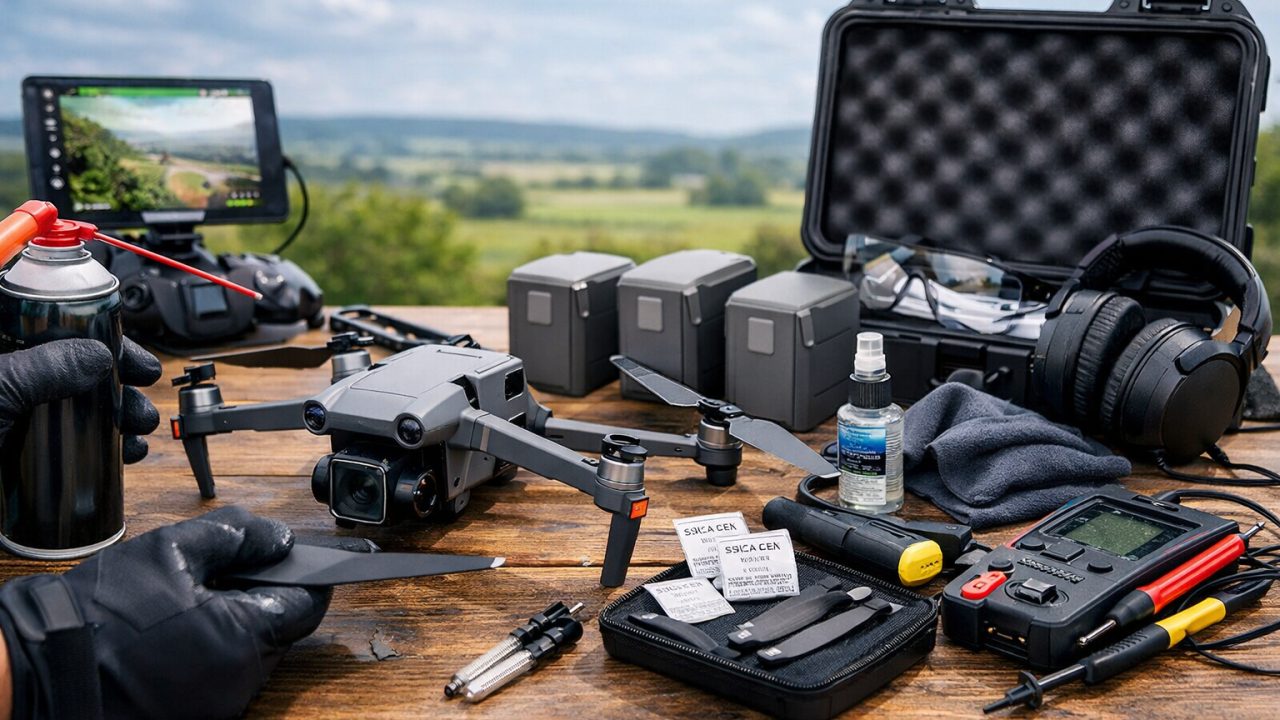
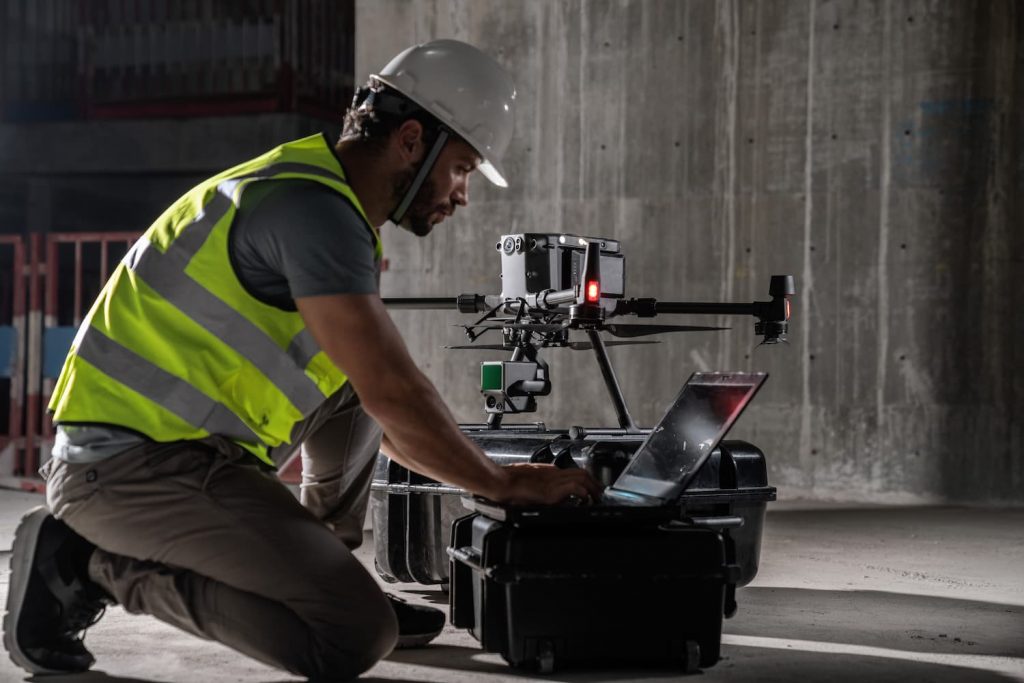
Coptrz is not positioning itself as a business that merely sells DJI products and leaves the customer to figure out the rest. Coptrz states that its UK repair centre is approved by DJI, and its broader servicing offer is built around maintenance, repair, updates, remote support and sector-led service plans. Its wider proposition also goes beyond pure hardware by combining repairs and support with consultancy, training and commercial drone integration.
That matters because it reframes the customer relationship.
Instead of a one-off transaction, the value becomes lifecycle support.
For the buyer, that means stronger practical confidence in areas such as:
Better uptime protection
If a drone is central to delivery, response or inspection work, downtime has a real cost. Coptrz explicitly positions its repair process around getting customers back in the air with minimal downtime, and its service offer includes both standard and express options as well as remote troubleshooting support.
More confidence in maintenance standards
Authorised support capability signals that repairs and servicing are being handled within a recognised framework rather than improvised through general electronics repair logic. That matters for organisations that want greater assurance around maintenance quality, fault diagnosis and post-service confidence. DJI’s own support model and warranty guidance reinforce the importance of authorised routes for aftersales work.
Stronger warranty and support clarity
When a fault appears, customers want to know where they stand. They do not want a blurred line between manufacturer support, reseller promises and third-party repair uncertainty. Working with a supplier that has authorised service capability helps simplify that path and reduce ambiguity at the point when support is needed most.
A more credible long-term fleet partner
For organisations managing several aircraft, batteries, controllers and payloads, the support model matters even more than the initial unit cost. Coptrz offers servicing plans, assessments and remote support across a range of DJI categories, which is the sort of structure buyers look for when they want continuity rather than ad hoc fixes.
Why this matters for procurement and commercial decision-making
Procurement teams and operational stakeholders should view repair and servicing capability as part of total buying value, not as an optional extra.
A lower upfront purchase price can look attractive until the first issue arises and the support path becomes fragmented. At that point, what seemed like a hardware decision becomes a service-risk decision.
The better question is not simply, “Who can supply the drone?” It is, “Who can help us protect this investment over time?”
That is where a DJI Authorised Service and Repair Centre creates real value. It gives buyers stronger grounds to believe that support will not end at dispatch. It gives operators a more robust route for diagnosis, servicing and repair. It gives internal decision-makers a clearer story around risk reduction, lifecycle value and operational continuity.
In short, it reduces uncertainty.
And in commercial drone operations, reduced uncertainty is valuable.
The real message behind authorised status
The most important point is not the badge on its own.
It is what the badge represents.
It represents a support infrastructure. It represents technical capability. It represents a more credible path from purchase through servicing, repair and continued use. It tells the market that the business is set up to support customers after the sale, not just before it.
It means customers are not just buying aircraft from a reseller. They are working with a partner that can support the full lifecycle of the investment, from advice and acquisition through to maintenance, repairs and ongoing operational confidence. Coptrz’s own offer is built around that broader model of support, combining product supply with repairs, servicing, training and technical assistance under one roof.
For organisations that depend on DJI drones to do real work, that is not a small difference.
It is a commercially meaningful one.
If you are reviewing DJI repairs in the UK, comparing reseller support, or looking for a more dependable long-term service partner, Coptrz is worth speaking to before your next purchase or before your next issue forces the decision for you.
Download Our FREE RPC-L1 Guide
Understand everything you need to know about moving towards commercial drone operations with our RPC-L1 guide.
Understand what RPC-L1 is and who it is for
Learn how the CAA transition impacts operators and training routes
Get a clear breakdown of requirements, costs and next steps
The UK’s First ‘Drone-Superhighway’ Will Open This Summer
The UK’s first drone superhighway, developed by Altitude Angel, is set to open this summer, creating a 165-mile network between Coventry and Milton Keynes. This innovative project, part of a significant investment in aerospace, aims to enhance emergency response, organ transportation, and efficient surveying through a system of 30 Arrow Towers for drone control. However, […]
Top Drones for Surveying in 2022 10 minute read Are you a surveyor looking to add drones to your operations in 2022? Are you exploring the latest and greatest hardware in the market? Well you’ve come to the right place! 2022 is set to be another exciting year for the Drone Industry as organisations are increasingly […]
COPTRZ Now Offering OFQUAL Level 4 Award to CAA Training Course Students
COPTRZ has always been committed to drone training. As an industry leader, we place a huge importance on education programmes as part of our offering which extends well beyond the point of sale. By training commercial, public and private organisations – as well as individuals – in how to operate drones, we are helping them […]
Unlock your business potential with drone technology
Manage Consent
To provide the best experiences, we use technologies like cookies to store and/or access device information. Consenting to these technologies will allow us to process data such as browsing behaviour or unique IDs on this site. Not consenting or withdrawing consent, may adversely affect certain features and functions.
Functional
Always active
The technical storage or access is strictly necessary for the legitimate purpose of enabling the use of a specific service explicitly requested by the subscriber or user, or for the sole purpose of carrying out the transmission of a communication over an electronic communications network.
Preferences
The technical storage or access is necessary for the legitimate purpose of storing preferences that are not requested by the subscriber or user.
Statistics
The technical storage or access that is used exclusively for statistical purposes.The technical storage or access that is used exclusively for anonymous statistical purposes. Without a subpoena, voluntary compliance on the part of your Internet Service Provider, or additional records from a third party, information stored or retrieved for this purpose alone cannot usually be used to identify you.
Marketing
The technical storage or access is required to create user profiles to send advertising, or to track the user on a website or across several websites for similar marketing purposes.