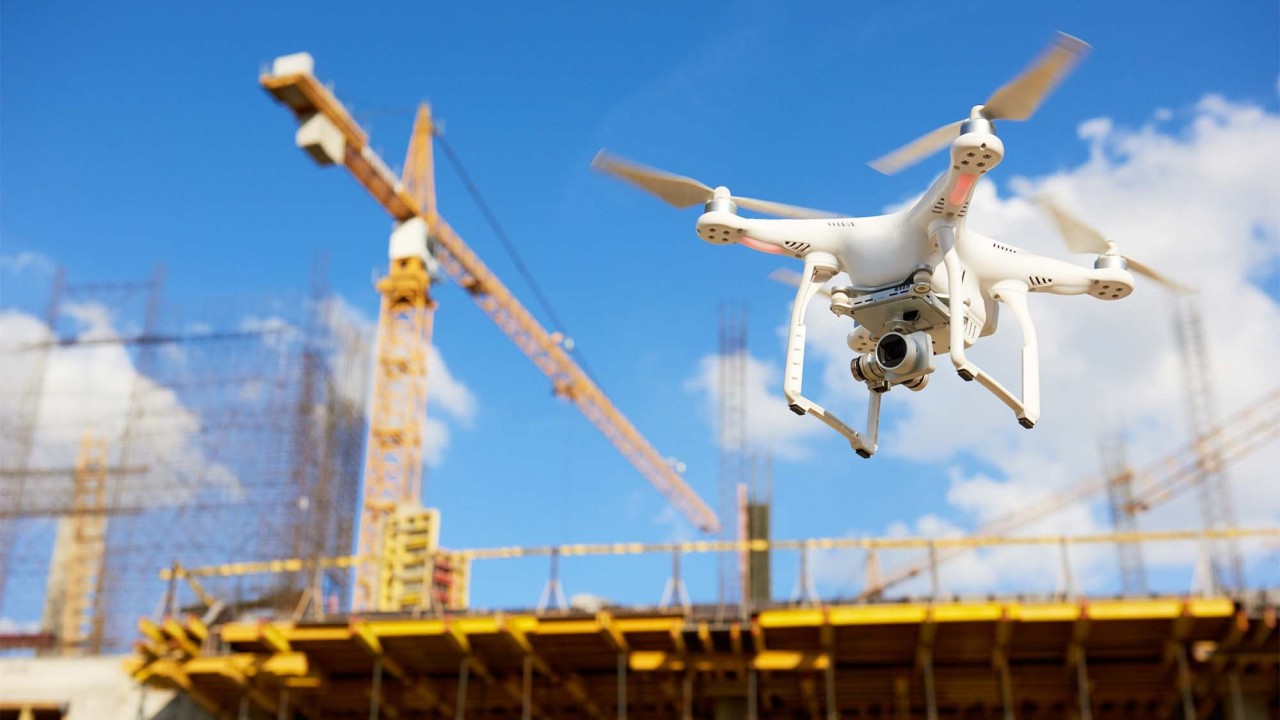
The construction industry is undergoing a technological transformation, and drones are at the forefront of this change. Recent UK research, particularly from Imperial College London and the University of Bristol, is exploring how drones can revolutionise construction practices. One of the most promising developments is Aerial Additive Manufacturing (Aerial AM), where drones autonomously deposit materials mid-air to build structures.
The Promise of Aerial Construction
Aerial AM offers several advantages over traditional construction methods. Drones can access hard-to-reach locations, such as high-rise buildings or disaster zones, without the need for scaffolding or cranes. This capability is particularly beneficial for rapid repairs and emergency shelter construction. Additionally, drones can operate in swarms, allowing for scalable and adaptable project execution.
Challenges to Overcome
Despite the potential, there are hurdles to address. Material durability, precise localization in outdoor environments, and coordination among multiple drones are areas requiring further research. Current construction robots are often ground-based and lack the mobility needed for complex terrains. However, early demonstrations of Aerial AM have shown promise in rapid on-demand repairs and modular assembly.
Real-World Testing and Future Outlook
To transition from concept to practice, the technology is being tested at DroneHub in Switzerland, Europe’s first full-scale environment for drone-based construction trials. This facility allows engineers to simulate various conditions, pushing drone capabilities to their limits. The ultimate goal is to develop fully autonomous aerial robots that can analyze environments, detect errors, and adapt blueprints mid-flight, leading to smarter and more efficient construction processes.
Conclusion
The integration of drones into construction signifies a shift towards more agile, efficient, and safer building practices. As research progresses and technology matures, drones are poised to become indispensable tools in the construction industry’s toolkit.
Download Our FREE RPC-L1 Guide
Understand everything you need to know about moving towards commercial drone operations with our RPC-L1 guide.
- Understand what RPC-L1 is and who it is for
- Learn how the CAA transition impacts operators and training routes
- Get a clear breakdown of requirements, costs and next steps
Related Posts

Drones vs Planes: A midair tragedy waiting to happen
In today’s modern society, we can access data and information easily. The internet, the rise of smartphones and the huge leaps in technology have made the world a smaller place than ever. We can now see and experience things from across the globe which were previously out of reach, access information and data and expose […]

DJI Zenmuse L2 vs DJI Zenmuse L1: A Comprehensive Comparison
In the realm of aerial surveying and 3D data acquisition, DJI’s Zenmuse L1 and L2 stand as two pivotal models, each marking a significant milestone in the evolution of LiDAR technology. The Zenmuse L1, known for its robust integration of advanced Livox LiDAR, imaging, and inertial measurement technologies, set a benchmark in the industry. Its […]

How a farmer cuts costs by 56% with Pix4Dfields
Targeted herbicide applications of agricultural inputs help save costs whilst protecting soil health and the environment. Global demand for food is growing bigger but the challenges around agriculture and crop production are growing too. Increased prices of agricultural inputs and the higher need for more sustainable ways of production are posing a modern farming challenge. […]