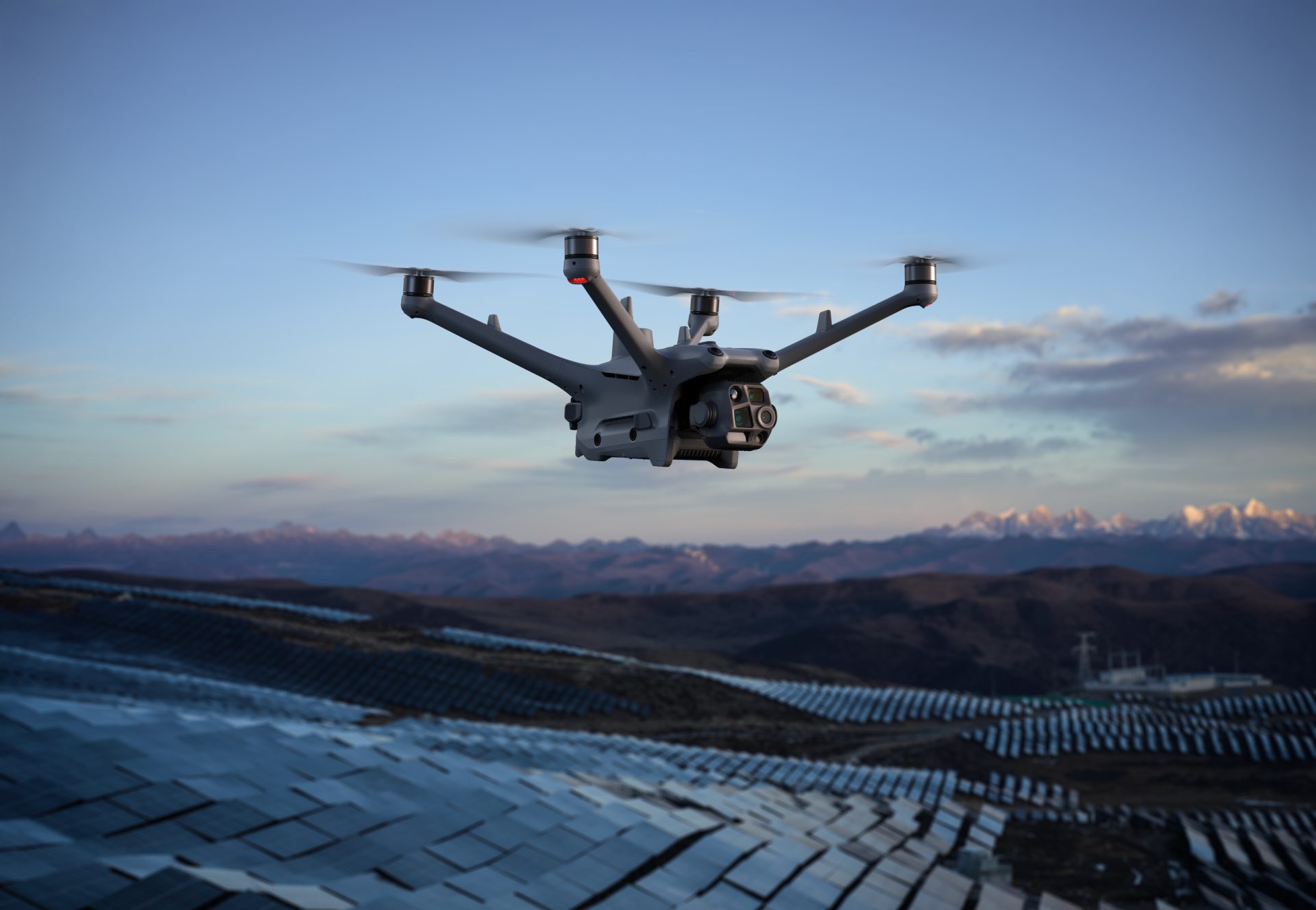
DJI Dock 4 is an automated drone station designed to keep the DJI Matrice 5TD at your site, ready for scheduled inspections and on-demand missions. Its main operational change is automatic battery swapping: the aircraft can receive a charged battery between flights while depleted batteries recharge inside the dock.
For UK teams planning repeat asset inspections, perimeter patrols or incident response, that changes how closely missions can follow one another. The right deployment still depends on your site, communications and operating approval. This guide explains what Dock 4 does, where it could fit and what to include in a quotation.
What is DJI Dock 4
A drone dock provides a permanent base for an aircraft. Dock 4 houses the Matrice 5TD between missions and supports remote dispatch, recovery and preparation for the next flight. Teams can manage planned routes and live operations through DJI FlightHub 2.
That setup is useful when the same location needs aerial coverage repeatedly. A utilities team could inspect an asset on a regular route, while a security team could request a flight after an alarm. These are potential applications; the deployment must be designed around the actual mission and the people supervising it.
How the automatic battery swap works
DJI lists a battery-swap stage of less than 25 seconds, measured from dock cover closure to battery insertion. Full operational turnaround is listed separately at less than 45 seconds. Keeping those figures separate gives you a more useful basis for planning than treating 25 seconds as the complete time between missions.
The dock has four battery bays and holds up to three stored batteries. One bay stays empty to receive the depleted aircraft battery. Two batteries can charge simultaneously, with DJI quoting 27 minutes for a 15% to 95% charge at 25°C.
Battery swapping allows the aircraft to use a different, ready battery while charging continues. A sufficiently charged battery must still be available, so mission frequency, battery condition and charging temperature affect sustained readiness. It is worth testing your busiest expected operating period when scoping the system.
DJI Dock 4 specifications at a glance
| Specification | DJI Dock 4 |
| Compatible aircraft | DJI Matrice 5TD |
| Battery swap stage | Less than 25 seconds |
| Operational turnaround | Less than 45 seconds |
| Battery storage | Up to three batteries across four bays |
| Charging reference | 15% to 95% in 27 minutes at 25°C |
| Dock protection | IP56 |
| Dock operating temperature | -40°C to 50°C |
| Dock weight | 66 kg excluding aircraft and compartment batteries |
| Positioning and transmission | Via DJI O4 Ground Station |
Figures are manufacturer-stated specifications. Installation and operating limits should be checked against the final system configuration.
Which aircraft works with DJI Dock 4
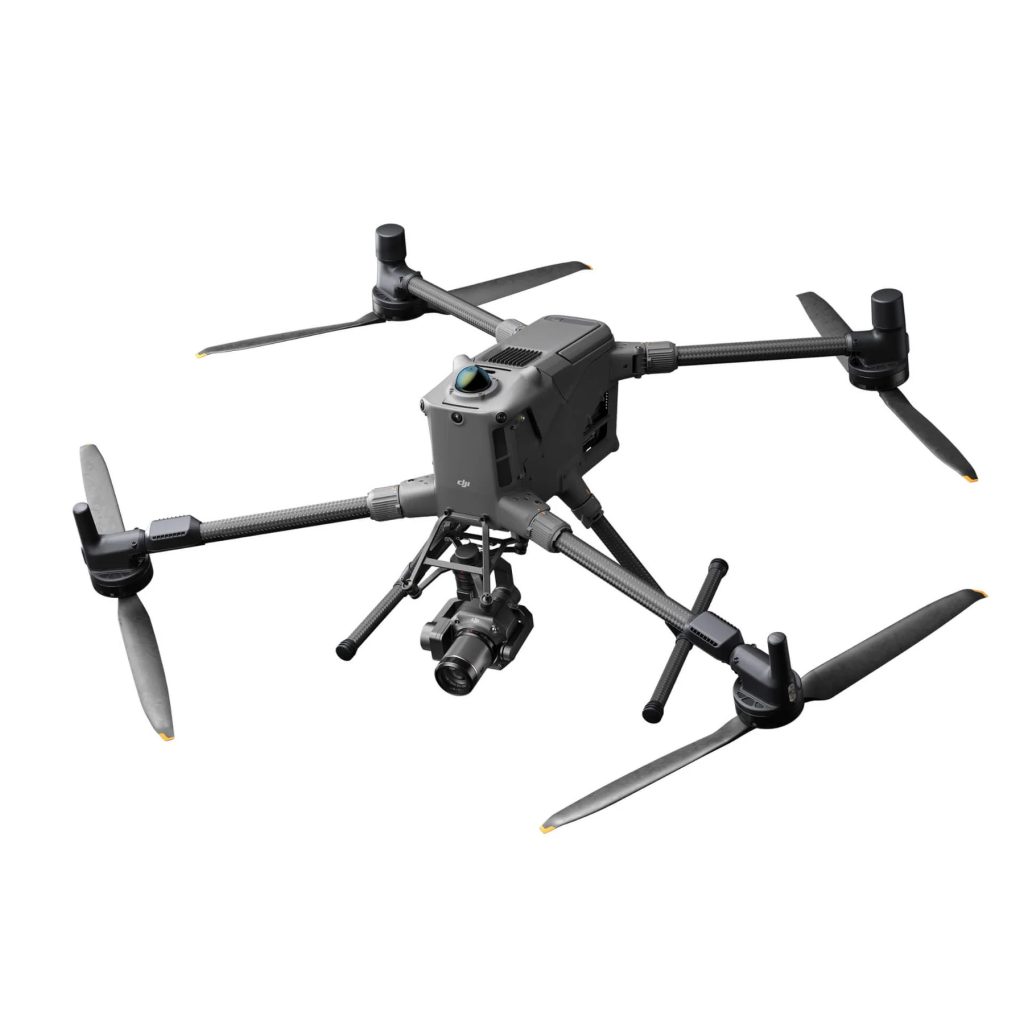
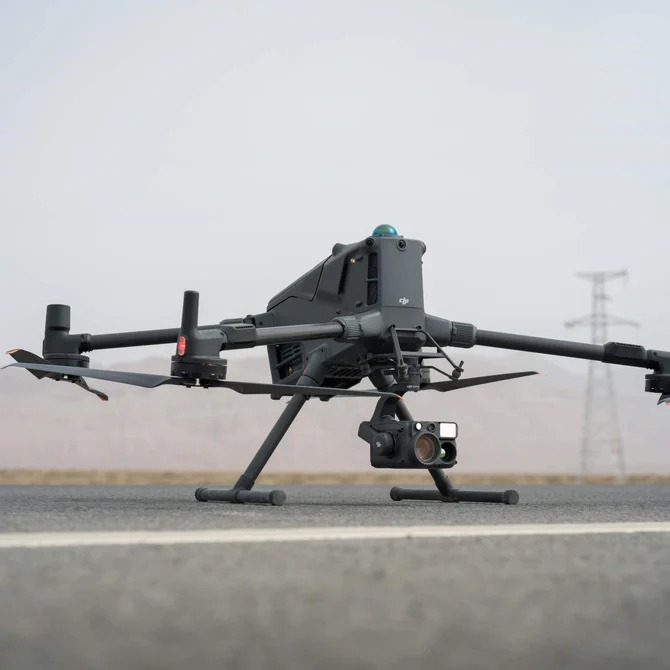
Dock 4 is designed for the DJI Matrice 5TD. Its camera system combines wide-angle, medium-telephoto and super-telephoto views with a native 1280 × 1024 thermal camera and a laser rangefinder rated up to 3 km under specified target conditions.
For an inspection team, those views serve different jobs. The wide camera establishes the scene, telephoto views help examine details, and thermal imagery helps locate temperature patterns that merit investigation. DJI lists a maximum flight time of 59 minutes; useful time over an asset also depends on transit, wind, payload and battery reserves.
The aircraft choice is part of the system choice. If you are replacing an existing DJI dock, compare the complete dock and aircraft package before planning the migration.
Connectivity and FlightHub 2
The DJI O4 Ground Station provides Dock 4 transmission and RTK positioning functions. Its separate location lets the site design take account of roofs, structures and other obstructions. Dock 4 also has built-in dual 4G connectivity, making cellular coverage and SIM provision part of the deployment discussion.
Transmission specifications vary by region. DJI’s detailed Matrice 5TD matrix lists a 12 km maximum under CE/MIC and 40 km under IC. UK buyers should use the applicable regional configuration when planning coverage. A transmission figure does not define the permitted flight area or the distance the aircraft can safely fly out and return.
FlightHub 2 supports the operational workflow, including route planning and live mission management. AI-assisted tools can support planning, observation and reporting, while the DJI Enterprise App supports collaboration. Confirm which features are included in your software package and available on the installed firmware.
Where DJI Dock 4 could add value
The strongest applications involve repeated demand for data or a need to see an incident quickly. Consider how each flight will lead to a decision:
- Utilities and energy teams can plan repeat views of assets and use visual or thermal findings to prioritise further inspection.
- Security teams can investigate alarms and review activity across an agreed operating area.
- Emergency services can assess whether remote aerial coverage would help their incident response plan.
- Construction and infrastructure teams can capture repeat observations for progress reviews and site coordination.
Estimate the number of useful missions, the travel they might avoid and who will review the results. This gives you a clearer business case than simply counting the number of flights the hardware can perform.
What a UK deployment needs
Start with a site survey covering mounting, access, power, the O4 Ground Station position, cellular coverage and the flight area. Then define mission routes, alternate landing areas, remote pilot responsibilities and maintenance arrangements.
UK operations in the Specific category require CAA operational authorisation. The CAA lists beyond visual line of sight operations under the UK SORA route. Agree the approval approach early, alongside the technical design.
Data handling also needs an owner. Decide who can view live imagery, where records will be held and how results will reach the people responsible for the asset or incident.
DJI Dock 4 pricing in the UK
Contact Coptrz for a tailored UK quotation. The scope should cover the dock and aircraft, O4 Ground Station, batteries, software, site works, connectivity and the training or support your team needs.
Give us your intended sites, mission frequency and target deployment date. That helps our specialists discuss a configuration and implementation plan that fit your operation.
Frequently asked questions
It has four bays, with space for up to three stored batteries. The remaining bay receives the depleted battery during a swap.
No. DJI lists less than 25 seconds for the swap stage and less than 45 seconds for operational turnaround. Charge readiness and system conditions still matter.
Start with your mission schedule. If time between flights is limiting the operation, battery swapping is a reason to examine Dock 4. Our DJI Dock 4 vs DJI Dock 3 comparison covers the wider system differences.
Plan your DJI Dock 4 deployment with Coptrz
Request the DJI Dock 4 information pack for specifications and a deployment checklist, or speak to a Coptrz DJI specialist for a tailored UK quotation. Call 0330 111 7177 to discuss your sites and intended missions.
Download Our FREE RPC-L1 Guide
Understand everything you need to know about moving towards commercial drone operations with our RPC-L1 guide.
- Understand what RPC-L1 is and who it is for
- Learn how the CAA transition impacts operators and training routes
- Get a clear breakdown of requirements, costs and next steps

Related Posts

Aerial Thermography: What are your best options?
As drone technology continues to expand, so does the range of solutions on offer to its users. Aerial thermal inspections are one such example where the tech is becoming smaller and increasingly affordable, enabling commercial operators the opportunity to become an aerial thermographer and transform their operations. So, what can you do and what solutions […]

5 steps to start drone surveying
10-minute read Surveying with a drone offers enormous potential to Surveyors and GIS professionals. With a drone it’s possible to carry out topographic surveys of the same quality and as accurately as traditional techniques, but at the fraction of the time and cost. But when it comes to getting an internal drone program up and […]
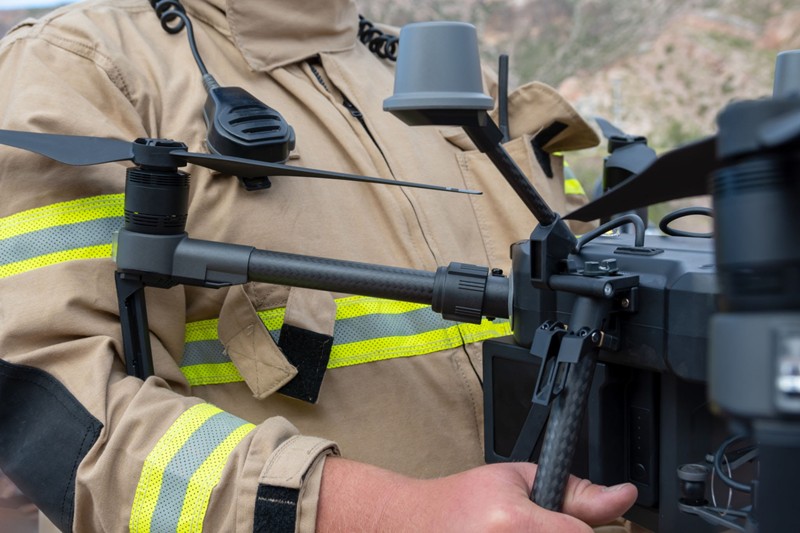
Elevating Public Safety: How Drones Are Transforming Emergency Response
When lives are on the line, situational awareness is the ultimate currency. For decades, emergency services relied heavily on ground teams and expensive manned aviation to gather critical intelligence. Today, Unmanned Aerial Vehicles (UAVs) have fundamentally shifted the operational paradigm. Public safety drones act as an immediate force multiplier. By deploying rapidly and providing real-time, […]