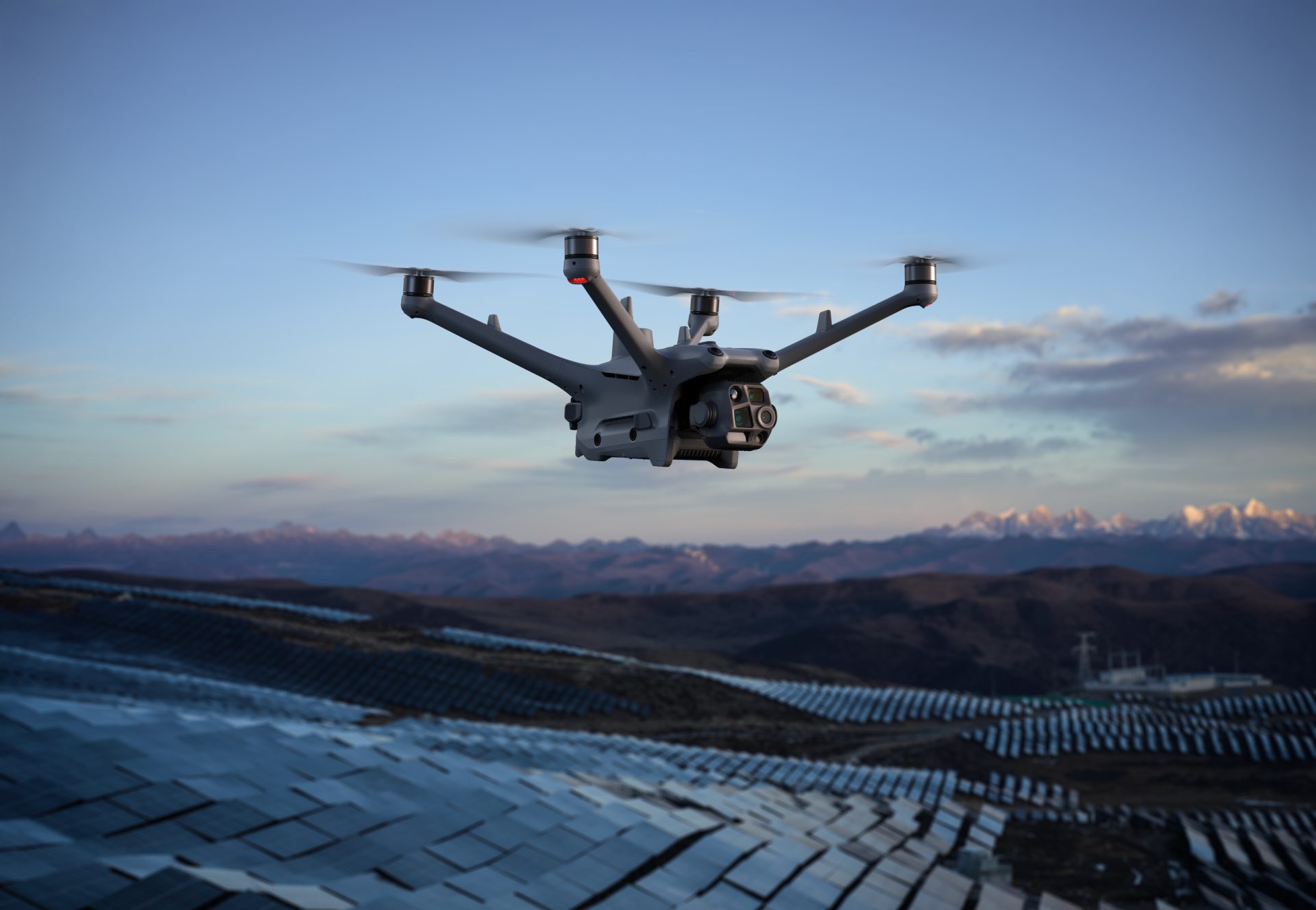
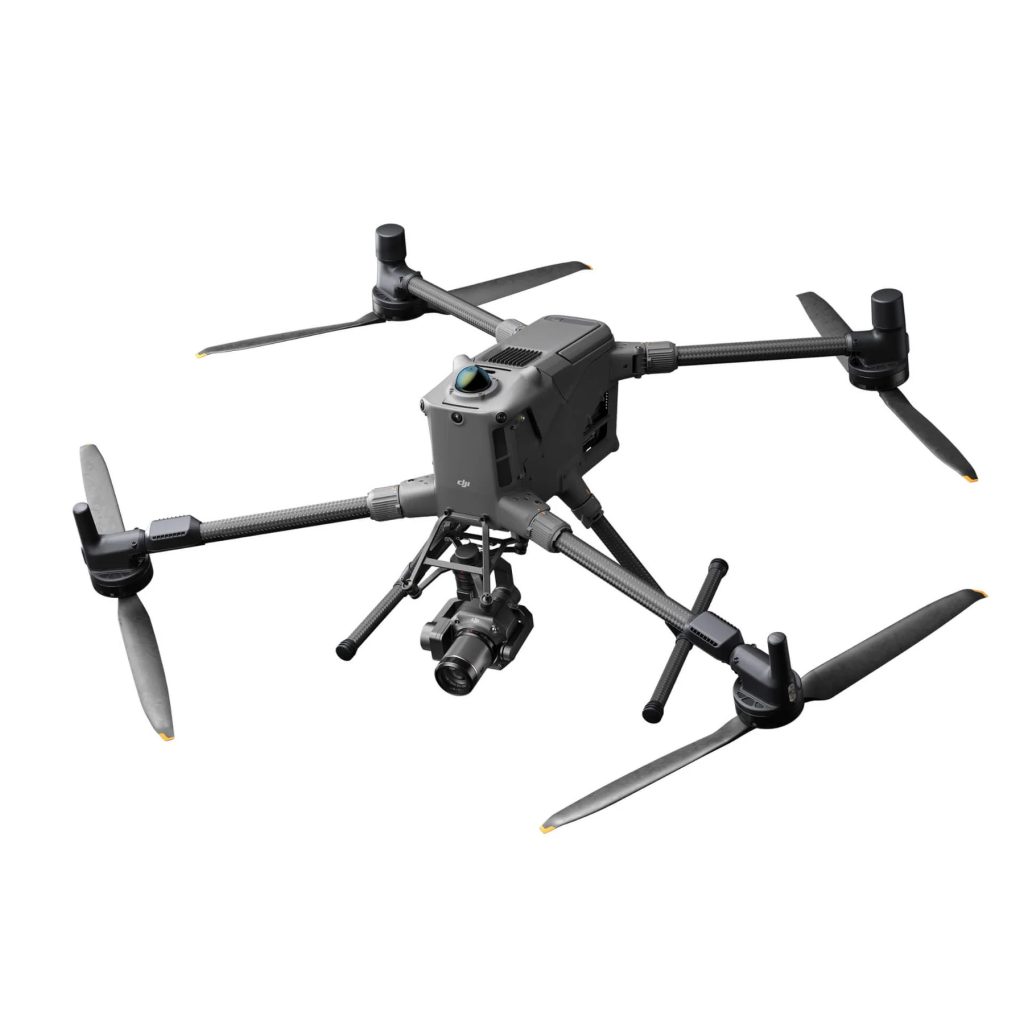
The main difference between DJI Dock 4 and DJI Dock 3 is how they prepare an aircraft for its next mission. Dock 4 automatically swaps the Matrice 5TD battery, while Dock 3 recharges the battery in its Matrice 4D or Matrice 4TD aircraft. That makes the time between missions a central question when choosing between them.
Dock 4 also changes the aircraft and communications setup. Dock 3 remains relevant where its capabilities fit the mission and an existing deployment already works well. This comparison looks at the practical differences for UK teams, including the changes that could justify an upgrade.
DJI Dock 4 and DJI Dock 3 compared
| Feature | DJI Dock 4 | DJI Dock 3 |
| Aircraft | Matrice 5TD | Matrice 4D or Matrice 4TD |
| Between missions | Automatic battery swap | Aircraft battery recharges in dock |
| Swap stage | Less than 25 seconds | No automated swap |
| Operational turnaround | Less than 45 seconds stated | Charging depends on battery state |
| 15% to 95% charge at 25°C | 27 minutes | 27 minutes |
| Dock protection | IP56 | IP56 |
| Dock temperature range | -40°C to 50°C | -30°C to 50°C |
| Dock weight | 66 kg excluding aircraft and stored batteries | 55 kg excluding aircraft |
| RTK arrangement | Via separate O4 Ground Station | Built into dock |
| Backup power | Stored aircraft batteries | Built-in backup battery |
Comparison based on the supplied DJI Dock 4 technical matrix and DJI’s Dock 3 specifications. Timings describe different stages of operation and should not be treated as equivalent tests.
Battery swapping is the main workflow change
On Dock 3, the aircraft stays in the dock while its battery recharges. The 27-minute figure covers charging from 15% to 95% at 25°C. It does not mean every mission requires exactly 27 minutes on the ground; the remaining charge and readiness threshold affect the wait.
Dock 4 separates that charging work from the aircraft. Its four bays hold up to three stored batteries, leaving one bay to accept the depleted battery. Two batteries can charge simultaneously while a ready battery is used for another flight.
For incident response or closely spaced inspections, this could reduce the waiting period between useful missions. For a site flying one scheduled route with a long gap before the next, the practical gain may be smaller. Compare the busiest part of your schedule and include the possibility that no stored battery is ready.
DJI lists the swap stage at less than 25 seconds and full operational turnaround at less than 45 seconds. Neither figure is a guarantee of uninterrupted aerial coverage from one aircraft.
The aircraft upgrade changes the evidence you can collect
Dock 4 is paired with the Matrice 5TD. Against the thermal Matrice 4TD, it offers native 1280 × 1024 thermal resolution instead of 640 × 512, an 11× telephoto view instead of 7×, and a stated maximum flight time of 59 rather than 54 minutes.
The Matrice 4TD also has a processed 1280 × 1024 UHR thermal mode. That is useful to distinguish from the Matrice 5TD’s native capture when reviewing image quality. Our DJI Matrice 5TD vs Matrice 4TD article covers the sensor differences in more detail.
Dock 3 also supports the Matrice 4D, which is aimed at mapping work and has a different camera specification. A thermal aircraft comparison alone will not answer the equipment question for a mapping team. Start with the deliverable you need, such as an inspection image or a survey dataset.
Connectivity needs a fresh site assessment
Dock 4 uses a separate DJI O4 Ground Station for transmission and RTK positioning, alongside built-in dual 4G. Its position, cabling and network access need to be included in the site design. Dock 3 has RTK built into the dock and can use the separately sold DJI Cellular Dongle 2 for cellular connectivity where supported.
Compare regional transmission specifications consistently. The detailed aircraft matrices list a 12 km CE maximum for both generations; the 40 km figure in Dock 4 materials is associated with IC. A UK upgrade case should not promise a jump from 12 km to 40 km simply by mixing regional figures.
Measured coverage at the site matters more than a maximum headline distance. Buildings, terrain and interference can affect the link, and the authorised flight area is a separate consideration.
Installation and weather limits
Both docks carry an IP56 rating, and both thermal aircraft carry IP55. Dock 4 extends the stated dock operating temperature range to -40°C, compared with -30°C for Dock 3. The aircraft has its own temperature specification, which should be checked separately.
An existing Dock 3 location still needs review before a Dock 4 installation. The dock dimensions, weight, communications hardware and electrical requirements change. DJI’s supplied materials also state that Dock 3 power cables are not compatible with Dock 4. Budget for a site assessment rather than assuming the hardware can simply be exchanged.
Vehicle deployment and planned features
DJI documents vehicle-mounted deployment for Dock 3, with installation and operating conditions. The supplied Dock 4 roadmap schedules vehicle deployment and a car kit for January 2027. Treat those Dock 4 capabilities as planned until their release is confirmed.
That distinction matters if a vehicle-based operation is your immediate priority. Compare the functions available on the firmware and equipment you will actually receive.
When should you consider upgrading
Dock 4 merits a closer look when missions are frequently delayed by charging, or when the Matrice 5TD’s imaging capabilities address an evidence gap in your current work. Define a test around those needs: time the full mission cycle and inspect sample data from the distances you normally use.
Keeping Dock 3 may be sensible when the current system meets your schedule and produces the required data. Account for installation changes, batteries, accessories, training and software when assessing the cost of migration. A newer specification only creates value if it improves the operation you need to run.
UK pricing and operating approvals
Contact Coptrz for a tailored UK quotation covering the complete deployment. Share your existing equipment, mission schedule and any constraints at the proposed site so we can discuss a like-for-like scope.
The CAA requires authorisation for Specific category operations. When changing equipment, assess whether your existing authorisation and operating documentation cover the proposed system and missions.
Frequently asked questions
It is a different system built around the Matrice 5TD. Plan a compatibility and site review covering the aircraft, batteries, power, communications and software before replacing an installation.
Both technical matrices list 27 minutes from 15% to 95% at 25°C. The key change is that Dock 4 can fit another charged battery while depleted batteries recharge.
Choose against mission frequency, required imagery and deployment conditions. The DJI Dock 4 guide explains the new system in more detail; Coptrz can help scope the options against your sites.
Compare a deployment with Coptrz
Speak to our DJI specialists or call 0330 111 7177. Bring your current flight schedule and the information your team needs from each mission, and request a tailored UK quotation.
Download Our FREE RPC-L1 Guide
Understand everything you need to know about moving towards commercial drone operations with our RPC-L1 guide.
- Understand what RPC-L1 is and who it is for
- Learn how the CAA transition impacts operators and training routes
- Get a clear breakdown of requirements, costs and next steps

Related Posts
Best Commercial drones for beginners in 2022
Whether you are looking at deploying drones in your business or are thinking about starting your own drone services company in 2022. There is no better time to get involved in the commercial drone market. A recent report by PWC shows that drones will provide a £42 billion uplift to the UK economy by 2030. […]

Wind Turbine Inspections – Martek Marine
We’re revolutionising the way visual wind turbine inspections are carried out using specialised UAS drone technology. Gone are the days of risking staff safety or using inefficient inspection techniques that don’t deliver complete blade coverage and data We’re committed to delivering minimum blade downtime to maximise your production. It’s all been made possible by the […]

Head to Head: DJI Phantom 4 Pro vs DJI Inspire 2
One of the biggest battles that rages on in the world of commercial drones, DJI’s Inspire 2 vs the Phantom 4 Pro. Two of the most impressive quadcopters the market has to offer, we here at COPTRZ have compared the two to see which is best for you! The Spec Phantom 4 Pro The Phantom […]