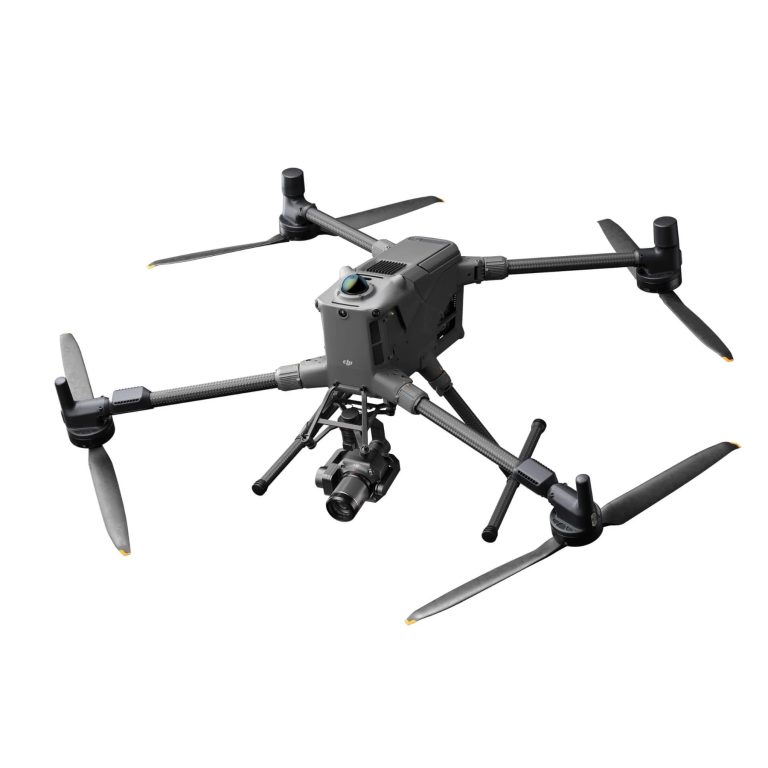
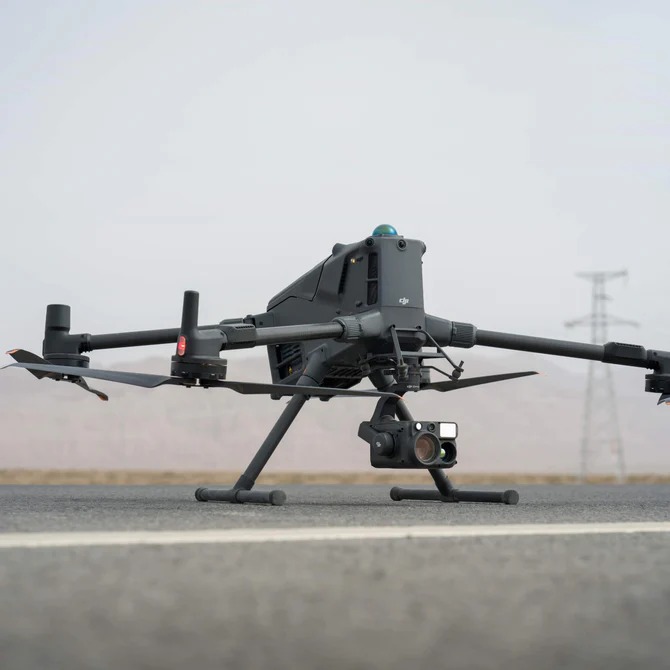
Choosing between the Flyability Elios 3 and the ScoutDI Scout 137 Gen 3 comes down to how you want to operate inside a confined space. Both are designed to inspect environments where GPS is unavailable, visibility is limited and sending personnel inside can introduce significant risks. However, their power systems, inspection workflows and sensor configurations are quite different.
The Flyability Elios 3 is a battery-powered, collision-tolerant inspection drone with an optional tether power system for extended operations. Its protective cage allows it to navigate complex interiors and withstand contact with surrounding structures.
The ScoutDI Scout 137 Gen 3 takes a different approach. It operates through a physical tether that supplies continuous power and data communication. It combines a 4K zoom camera, integrated 3D LiDAR and an optional ultrasonic thickness measurement (UTM) payload within a tethered inspection system.
Both platforms can support inspections in tanks, vessels, sewers and other GPS-denied industrial environments. The right choice depends on the access conditions, inspection duration, required measurements and how your team intends to collect and process inspection data.
The Flyability Elios 3 is available through Coptrz for organisations looking to introduce or expand their confined-space inspection capabilities. It is also worth considering how both platforms compare with other options in our guide to the best enterprise drones.
Flyability Elios 3 vs ScoutDI Scout 137 Gen 3: Technical Comparison
The following table compares the two platforms using their published manufacturer specifications. Optional payloads and maximum performance figures should be considered separately from standard configurations.
| Feature | Flyability Elios 3 | ScoutDI Scout 137 Gen 3 |
|---|---|---|
| Primary role | Free-flying confined-space inspection | Tethered confined-space inspection |
| Power | Rechargeable battery; optional tether power unit | 60 m tether supplying continuous power |
| Endurance | Up to 12.5 minutes with standard battery; up to 17 minutes with high-capacity battery | Unlimited while tethered and supplied with power |
| Lighting | Designed for 16,000 lumens; dustproof lighting modes | Up to 12,000 lumens |
| Camera | 4K visual camera and integrated radiometric thermal camera | 4K camera with 3.5× optical zoom and autofocus |
| LiDAR | Integrated LiDAR for SLAM navigation; optional Surveying Payload with Ouster OS0-128 Rev 7 | Integrated 128-beam Ouster OS0 |
| Data communication | Wireless radio link; optional range extender | Wired power-line communication over tether; no RF transmitters or receivers |
| Protection | Collision-tolerant protective cage; designed to comply with IP44 | IP54 flight electronics |
| Ultrasonic thickness measurement | Optional UT payload | Optional UTM payload |
| Other sensors | Optional surveying, radiation and gas-sensing payloads | Standard flammable-gas sensor |
| Minimum access | Compact caged aircraft; access depends on the opening and configuration | 600 mm minimum circular manway |
| Airframe | Protective cage with reversing propellers and flip-recovery capability | 448 × 479 × 262 mm; 3 kg |
| Software | Flyability Cockpit and Inspector | Scout Operator, Scout Companion, Scout Portal and Scout Viewer |
| Operating temperature | Configuration-dependent; surveying configuration rated 0°C to +48°C | −20°C to +50°C |
Specifications are based on manufacturer documentation. Battery endurance varies with payload, battery type and operating conditions. Flyability describes its Elios 3 as designed to comply with IP44; this should not be interpreted as formal IP44 certification.
Power and Endurance: Battery Operation vs Tethered Inspection
One of the biggest differences between the two drones is how they receive power during an inspection.
Flyability Elios 3: Battery-powered flexibility
The Flyability Elios 3 normally operates using a rechargeable battery, allowing pilots to move freely through confined spaces without managing a physical power cable.
Flyability publishes maximum flight times of up to 12.5 minutes with the standard battery and up to 17 minutes with its high-capacity battery. Actual operating time depends on the installed payload and environmental conditions. For example, the optional Surveying Payload configuration is published with a nine-minute flight time under ideal conditions.
For inspections involving several tanks, compartments or access points, the battery-powered configuration allows teams to relocate between openings without repositioning a tether system.
For longer inspections, Flyability also offers the optional Tether Power Unit. This system supplies continuous power through a 50 m Kevlar-reinforced cable connected to a ground power unit. It supports 100–240 V AC input from a suitable mains supply, generator or compatible portable power station.
The tether system also includes backup battery power for a controlled landing if external power is interrupted. Importantly, the Elios 3 can be switched between tethered and battery-powered operation.
ScoutDI Scout 137 Gen 3: Continuous tethered operation
The ScoutDI Scout 137 Gen 3 is designed around a tethered architecture from the start. Its 60 m cable carries both power and data between the drone and ground station.
Unlike a battery-powered aircraft, the ScoutDI does not depend on an onboard flight battery. As long as the ground station has a suitable power supply and the tether can reach the inspection area, the aircraft can continue operating without conventional battery changes.
The tether provides 400 V DC power and an 80 Mbit/s data connection. The ground station requires a 200–240 V AC supply, 50/60 Hz, with a minimum 13 A current rating.
This setup is particularly useful for inspections requiring extended visual coverage or repeated ultrasonic thickness measurements inside a single asset.
However, the tether introduces its own operational considerations. Teams must manage cable routing, prevent snagging on internal structures and account for the available tether length when planning the inspection.
The ScoutDI system also has a published maximum lifting distance of 35 m when equipped with its UTM payload.
For teams inspecting multiple assets throughout the day, the time required to reposition the ground station and manage the tether should be included in the deployment plan.
Physical Collision Protection and Inspection Visibility
Both aircraft are designed to operate in challenging industrial interiors, but they approach navigation and inspection differently.
Flyability Elios 3: Built for contact
The Flyability Elios 3 features a protective cage surrounding its propellers and airframe. Its collision-tolerant design allows the drone to make contact with surrounding structures while maintaining protection for its flight components.
Flyability’s reversing-motor technology also enables the aircraft to recover from an upside-down position in supported operating conditions.
This is particularly useful when inspecting cluttered environments containing pipes, beams, structural supports and irregular surfaces where maintaining a completely clear flight path may be difficult.
The aircraft combines a 4K visual camera with a radiometric thermal camera, allowing operators to collect visual and temperature-related inspection data during the same mission.
Its lighting system is designed for 16,000 lumens and includes dustproof and oblique lighting modes. Oblique lighting directs illumination across a surface at an angle, creating shadows that can make surface irregularities such as corrosion, pitting, cracks and material build-up easier to identify.
ScoutDI Scout 137 Gen 3: Integrated imaging and LiDAR
The ScoutDI Scout 137 Gen 3 combines its tethered power architecture with an integrated 4K camera, optical zoom and 3D LiDAR.
Its camera records 4K video and images, with 3.5× optical zoom and autofocus. The two-axis gimbal provides up to ±90° pitch movement, allowing operators to inspect different surface orientations without relying entirely on aircraft repositioning.
Lighting is provided by six individually controlled LEDs, producing up to 12,000 lumens. Operators can use preset lighting configurations or adjust individual lights to suit the inspection environment.
The integrated Ouster OS0 128-beam LiDAR supports GPS-free SLAM navigation and real-time 3D mapping.
ScoutDI publishes a sensing range of 0.5–75 m at 80% reflectivity and up to 35 m at 10% reflectivity.
The platform also offers a software-based Virtual Cage feature, introduced through ScoutDI software version 2.4.0, to provide additional anti-collision protection. Its operation and configuration should be checked against the current software documentation.
The distinction is important: the Elios 3 relies on its physical protective cage and collision-tolerant flight design, while ScoutDI combines tethered operation, integrated LiDAR and software-based navigation and protection features.
For additional examples of how inspection drones are used across different industries, see our round-up of inspection drones.
Ultrasonic Thickness Measurement and Additional Inspection Sensors
Visual inspection is not always sufficient when assessing the condition of industrial assets. Many inspection programmes also require ultrasonic thickness measurements to identify material loss, corrosion and changes in structural integrity.
Both platforms support dedicated ultrasonic thickness measurement solutions, but their workflows differ.
Flyability Elios 3 UT Payload
The Flyability Elios 3 supports an optional UT Payload developed in collaboration with Cygnus Instruments.
The system allows operators to collect ultrasonic thickness measurements remotely, reducing the need for personnel to enter difficult-to-access areas or use additional access equipment.
Its technical specifications include:
- Measurement range of 0.8–250 mm in steel, depending on probe and configuration.
- Measurement accuracy of ±0.1 mm or 0.1% of the measurement, whichever is greater.
- Interchangeable dual-element transducers.
- Live A-scan display.
- Location-tagged measurements.
- Optional surface-cleaning accessories.
The payload can be used alongside the aircraft’s visual inspection capabilities, allowing teams to collect photographic evidence and thickness measurements during an inspection programme.
ScoutDI Scout 137 Gen 3 UTM Payload
The ScoutDI Scout 137 Gen 3 offers an optional UTM Payload designed around a tether-powered inspection workflow.
Its system combines an ultrasonic probe, an articulating arm, surface preparation tools and a couplant supply. This allows operators to prepare a measurement location and collect thickness readings during the same flight.
Published specifications include:
- Steel thickness measurement range of 1–150 mm, depending on material.
- Accuracy of less than 0.1 mm or ±1%.
- Resolution of 0.001 mm.
- Support for measurements through coatings up to 6 mm using Multi-Echo mode.
- Three dual-crystal probe options: 2.25 MHz, 5 MHz and 7.5 MHz.
- Location-tagged measurement records.
- Integrated surface preparation and couplant delivery.
The UTM payload uses magnetic contact to hold its measurement assembly against suitable steel surfaces. Its articulating arm can operate from −20° to +90°, supporting measurements on vertical surfaces and overhead structures.
ScoutDI also publishes a maximum lifting distance of 35 m with the UTM Payload.
The key difference is the inspection workflow. The Elios 3 offers a modular UT inspection payload, while the ScoutDI UTM system integrates surface preparation, couplant delivery and measurement into a continuous tether-powered operation.
Neither solution should be considered universally better for ultrasonic testing. The choice depends on the required measurement range, surface condition, inspection method, access and reporting requirements.
Radio Communication, Gas Detection and Operating Environments
Radio communication can be a significant consideration when inspecting enclosed steel structures.
Thick metal walls, complex industrial layouts and enclosed compartments can interfere with wireless communication. In some environments, organisations may also have restrictions on radio transmission.
ScoutDI’s wired communication architecture
The ScoutDI Scout 137 Gen 3 does not use RF transmitters or receivers for its aircraft communication.
Instead, control and data are transmitted through the physical tether using power-line communication. This allows the system to maintain its communication link without depending on a conventional wireless connection inside the asset.
ScoutDI also includes a flammable-gas sensor as standard on the Gen 3 platform. The system uses NevadaNano MPS technology and provides live gas telemetry.
The sensor is designed to detect multiple flammable gases, with published detection across a 0–100% LEL range.
However, the Scout 137 is not ATEX-certified. Its gas-sensing capabilities and absence of RF transmitters should not be interpreted as automatic approval for use in every potentially explosive atmosphere. Site-specific hazardous-area requirements must still be assessed.
Flyability Elios 3 wireless communication
The Flyability Elios 3 uses a wireless connection between the aircraft and remote controller.
Its navigation system combines LiDAR-based SLAM with the Cockpit application, providing pilots with a live 3D view of their surroundings and flight position.
A range extender is available for operations where additional communication coverage is required.
The aircraft also supports additional payloads for different inspection requirements, including:
- Surveying Payload for 3D mapping.
- UT Payload for ultrasonic thickness measurement.
- Radiation sensor for remote radiation measurements.
- Gas sensor for gas detection.
This modular approach allows inspection teams to adapt the aircraft to different applications without investing in an entirely separate drone platform for every inspection task.
Data Collection and Inspection Software
The usefulness of an inspection drone depends not only on the information it captures but also on how easily that information can be reviewed, organised and shared.
Both manufacturers provide software designed to support inspection reporting and analysis.
Flyability Cockpit and Inspector
The Flyability Elios 3 uses Cockpit during flight operations, giving pilots access to live camera feeds, telemetry and LiDAR-based situational awareness.
After the flight, Inspector allows teams to review recorded inspection data and visualise findings against a 3D model of the inspected environment.
Captured points of interest can be positioned within the model, helping engineers and inspection teams identify where defects were observed and plan follow-up work.
For organisations conducting repeat inspections, this provides a useful way to compare findings and maintain a digital record of asset conditions.
ScoutDI Scout Operator, Companion and Portal
The ScoutDI platform uses several software tools to support different stages of an inspection.
Scout Operator is used by the pilot to control the aircraft and monitor the live inspection feed.
Scout Companion supports the UTM workflow, providing access to ultrasonic measurements and A-scan information during the inspection.
After the mission, Scout Portal provides a platform for managing and reviewing inspection data, including video, measurements and 3D point clouds.
Scout Viewer also allows recorded inspection data to be reviewed locally without requiring a cloud upload.
ScoutDI publishes an approximate data capture rate of 25 GB per hour. Teams should therefore consider storage capacity, transfer time and post-inspection data management when planning longer missions.
Class Inspections and Industry Acceptance
For maritime and offshore inspections, equipment specifications are only one part of the decision. Inspection methods, operator qualifications, measurement procedures and classification-society requirements must also be considered.
The Flyability Elios 3 UT has documented acceptance from the American Bureau of Shipping (ABS) as a data-collection tool for class inspections.
Flyability worked with ABS to assess the aircraft and UT payload through inspection trials on different vessel types. ABS subsequently updated its guidance to recognise drone-based ultrasonic thickness measurements as an inspection technique.
Lloyd’s Register has also issued an approval certificate for 3D Test Solutions B.V. covering its remote inspection system using the Flyability Elios 3 with UT Payload for a specified hull-thickness measurement scope.
These examples should not be interpreted as blanket approval for every Elios 3 operator, payload configuration or inspection programme. Approval depends on the applicable scope, service provider and classification-society requirements.
For ScoutDI, its Gen 3 platform provides location-tagged UTM readings and inspection data designed to support engineering and class-related workflows. However, organisations should confirm acceptance of the particular system, service provider and inspection procedure with the relevant classification society before deployment.
In both cases, the inspection method and resulting measurements must meet the requirements of the asset owner and applicable inspection authority.
Which Confined Space Inspection Drone Should You Choose?
The Flyability Elios 3 and ScoutDI Scout 137 Gen 3 are designed for similar industrial environments, but their operating architectures make them better suited to different inspection programmes.
Choose the Flyability Elios 3 if:
- You need a battery-powered drone that can move freely between inspection locations.
- Your assets contain complex internal structures where physical collision protection is valuable.
- You need visual and radiometric thermal inspection in the same aircraft.
- You require optional payloads for surveying, ultrasonic thickness measurement, radiation or gas sensing.
- Your inspection programme involves several assets, access points or different types of inspection work.
- You want the flexibility to switch between battery and tether-powered operation.
The Elios 3 is particularly suitable for inspection teams that need a versatile platform capable of handling different inspection requirements across multiple industrial environments.
Choose the ScoutDI Scout 137 Gen 3 if:
- You need continuous tether-powered operation without conventional battery changes.
- Your inspection involves extended operations within an asset accessible through a suitable tether route.
- Wireless radio communication is restricted or unreliable.
- You need integrated 128-beam LiDAR and 4K optical zoom.
- Your inspection procedure benefits from the ScoutDI UTM workflow, including surface preparation and thickness measurement.
- You want integrated flammable-gas sensing and location-tagged inspection data.
The ScoutDI Scout 137 Gen 3 is particularly suited to teams that prioritise continuous operation, wired communication and a structured inspection workflow inside large industrial assets.
Check access requirements before choosing
Before purchasing either platform, measure the smallest opening along the intended deployment route.
ScoutDI publishes a minimum circular manway diameter of 600 mm for the Scout 137 Gen 3.
For the Elios 3, access requirements depend on the aircraft configuration and installed payload. Its Surveying Payload documentation, for example, describes access through openings as small as 50 × 50 cm.
The main access hatch is not necessarily the limiting point. Internal obstructions, bends, platforms and the route to the inspection area should also be considered.
UK Operations, Safety and Training
Using an inspection drone does not remove the need for a proper confined-space safety procedure.
Before deployment, organisations should consider the site’s permit-to-work requirements, atmospheric monitoring, isolation procedures, emergency arrangements and rescue plans.
The purpose of these aircraft is to reduce the need for personnel to enter hazardous or difficult-to-access areas. They do not automatically eliminate every confined-space risk or replace the site’s safety management procedures.
Where an operation involves flying outdoors or in UK airspace, operators should also check the applicable Civil Aviation Authority requirements, authorisations and operating procedures.
Training is another important consideration, particularly for teams introducing indoor inspection drones for the first time.
Coptrz Academy offers a Flyability Elios 3 model-specific training course, covering the aircraft, payloads, Cockpit, Inspector and post-processing workflows.
Teams looking to develop their indoor flying skills can also explore:
Selecting appropriate training helps operators understand the equipment, plan inspections and collect reliable data while following site-specific safety procedures.
Frequently Asked Questions
Does the Flyability Elios 3 fly without a tether?
Yes. The Flyability Elios 3 is primarily a battery-powered inspection drone and can operate without a physical connection to the ground. Its standard battery provides up to 12.5 minutes of maximum flight time, while the optional high-capacity battery offers up to 17 minutes. For longer operations, the optional Tether Power Unit provides continuous power through a 50 m cable.
Why does the ScoutDI Scout 137 Gen 3 have no radio?
The ScoutDI Scout 137 Gen 3 uses a physical tether for power and data communication instead of wireless radio transmission. Its power-line communication system provides an 80 Mbit/s data link between the aircraft and ground station. This makes it suitable for environments where wireless communication may be unreliable or radio transmission is restricted. However, the system is not ATEX-certified.
Which drone is better for ultrasonic thickness measurement?
Both drones support dedicated ultrasonic thickness measurement payloads. The Flyability Elios 3 UT uses Cygnus technology and offers interchangeable probes and location-tagged measurements. The ScoutDI Scout 137 Gen 3 UTM integrates ultrasonic measurement with surface preparation, couplant delivery and magnetic contact in a tether-powered workflow. The better option depends on the required measurement range, surface condition, inspection procedure and operating environment.
Can the ScoutDI Scout 137 Gen 3 operate indefinitely?
The ScoutDI Scout 137 Gen 3 is designed for unlimited flight time while connected to its ground station and supplied with power. Its 60 m tether provides continuous power and data communication, removing the conventional battery endurance limitation. Actual inspection duration will still depend on the mission, equipment, power supply and site conditions.
Does the Flyability Elios 3 have LiDAR?
Yes. The Elios 3 uses integrated LiDAR for SLAM navigation and situational awareness. An optional Surveying Payload adds an Ouster OS0-128 Rev 7 sensor for higher-capability 3D surveying and point-cloud capture. The surveying configuration is published with a maximum range of up to 100 m, although actual scanning accuracy depends on the environment and operating conditions.
Discuss the Flyability Elios 3 with Coptrz
Choosing the right confined-space inspection drone depends on the type of asset, access restrictions, inspection requirements and the data your team needs to collect.
The Flyability Elios 3 offers a flexible battery-powered platform with collision-tolerant protection and a modular sensor ecosystem. The ScoutDI Scout 137 Gen 3 provides a tethered alternative with continuous power, integrated LiDAR and a dedicated inspection workflow.
If you are considering introducing drone-based inspections or expanding your existing capabilities, Coptrz can help you assess the available equipment and identify a suitable configuration.
Request the Flyability Elios 3 information pack for an overview of its specifications and available payloads.
To discuss your inspection requirements, including how the Flyability Elios 3 compares with the ScoutDI Scout 137 Gen 3, contact our Flyability specialists or call 0330 111 7177 for a tailored UK quotation.
Download Our FREE RPC-L1 Guide
Understand everything you need to know about moving towards commercial drone operations with our RPC-L1 guide.
- Understand what RPC-L1 is and who it is for
- Learn how the CAA transition impacts operators and training routes
- Get a clear breakdown of requirements, costs and next steps
Related Posts
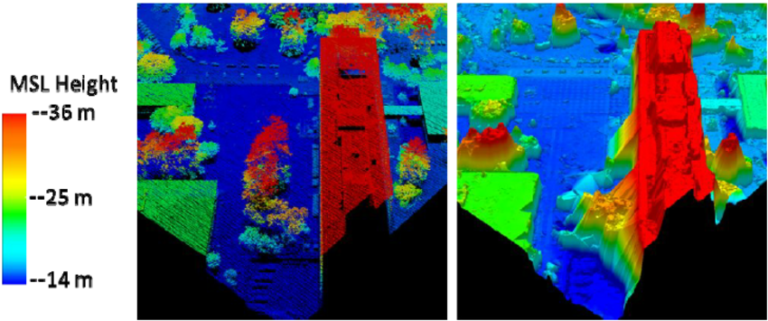
Is UAV LiDAR the Next Big Thing for Surveying?
In the world of technological innovation, there usually comes a time where an invention crosses over from cutting-edge, into the mainstream, from being a great concept, into a greater reality. UAV LiDAR is one such technology. What could be better than mobile LiDAR? Affordable airborne LiDAR, of course! The world of surveying covers such a […]
Anti-drone technology. Why it’s become essential for airports
With the pronounced rise in drone popularity over the past few years has come an extra responsibility to control the skies above us. Drone detection solutions have become important for this purpose, offering the ability to not only detect drones over a wide distance but also access a variety of potentially vital information such as […]
Drone Market Update: Industry Valued at £42 billion in new PwC report
Accountancy giants PwC have today released a report stating that the drone industry is expected to offer a £42 billion uplift to the UK economy by the year 2030. It is expected there will be more than 72,000 drones in the sky by the end of the next decade. The biggest area expected to be […]