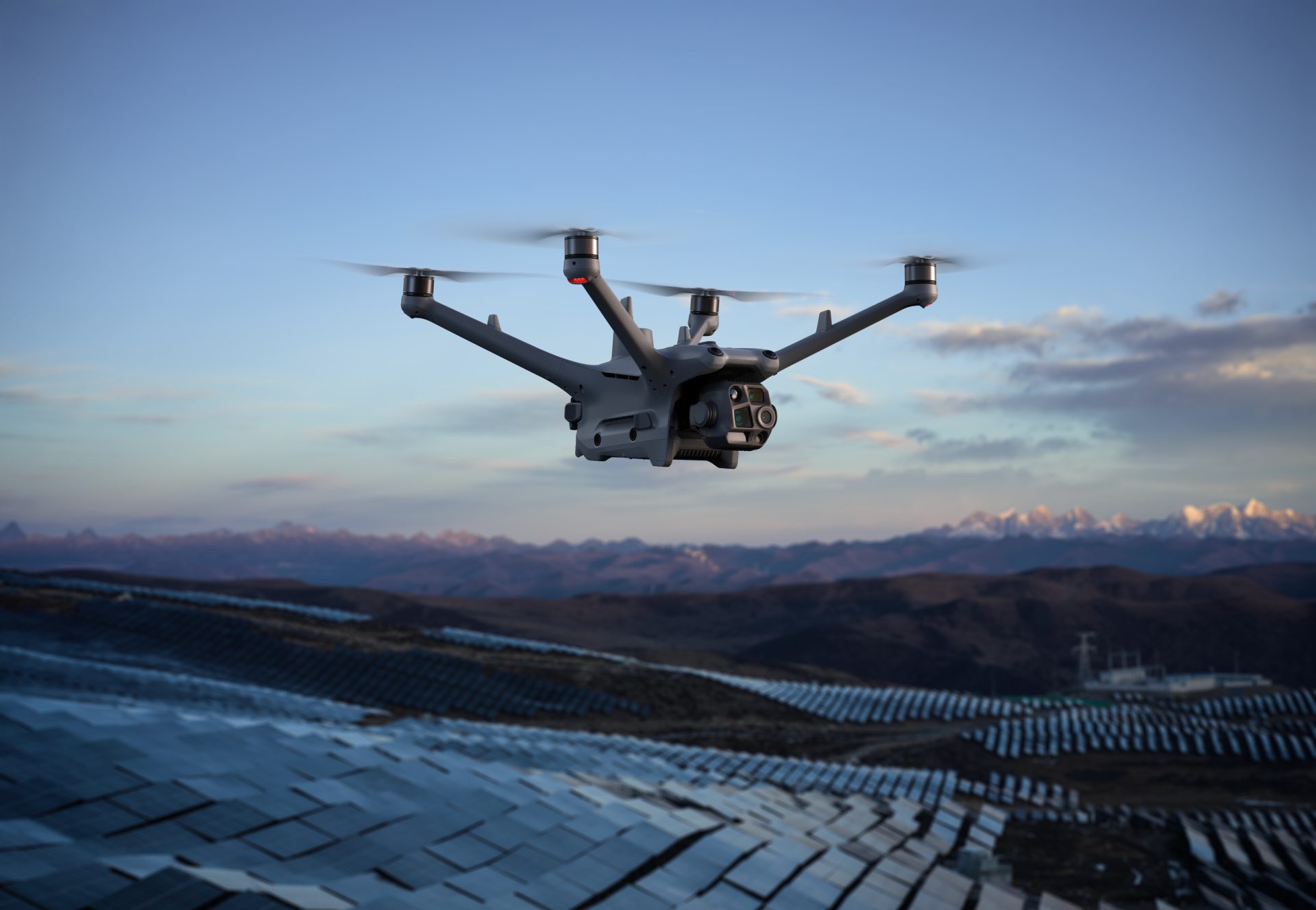
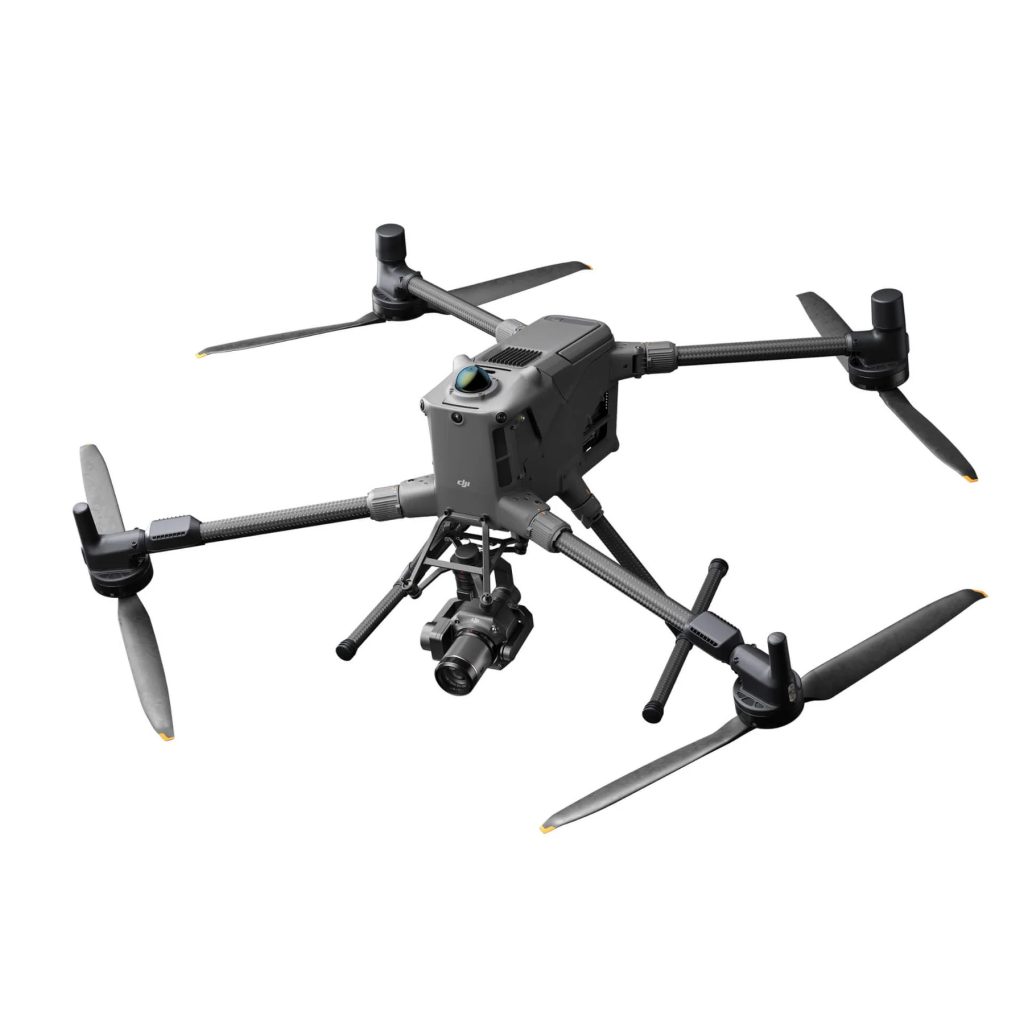
The DJI Matrice 5TD brings higher native thermal resolution, a longer telephoto focal length and more stated flight time than the DJI Matrice 4TD. It also belongs to a different dock system: the Matrice 5TD is designed for DJI Dock 4, while the Matrice 4TD is part of the DJI Dock 3 range.
For a UK inspection or response team, the choice depends on the evidence you need and how you intend to operate. A camera upgrade may justify a closer look, while an established Matrice 4TD operation may already meet the task. Here are the differences that matter when assessing an upgrade.
DJI Matrice 5TD and Matrice 4TD specifications
| Feature | DJI Matrice 5TD | DJI Matrice 4TD |
| Dock pairing | DJI Dock 4 | DJI Dock 3 |
| Wide and medium tele cameras | 50 MP each | 48 MP each |
| Telephoto camera | 50 MP and 252 mm equivalent | 48 MP and 168 mm equivalent |
| Telephoto view | 11× | 7× |
| Maximum hybrid zoom | 176× | 112× |
| Native thermal resolution | 1280 × 1024 | 640 × 512 |
| Processed thermal resolution | Up to 2560 × 2048 | Up to 1280 × 1024 UHR |
| Rangefinder maximum | 3 km at 25% reflectivity | 1.8 km at 20% reflectivity |
| Maximum flight time | 59 minutes | 54 minutes |
| Maximum hover time | 55 minutes | 47 minutes |
| Aircraft protection | IP55 | IP55 |
| Aircraft temperature range | -40°C to 50°C | -20°C to 50°C |
Figures are manufacturer-stated, drawn from DJI’s supplied technical comparison and published Matrice 4TD specifications. Maximum figures are not a guarantee of results on a working mission.
Thermal imaging is a substantial sensor change
The Matrice 5TD has twice the native thermal pixel count across each image dimension. Multiplying width by height gives four times as many native pixels: 1,310,720 compared with 327,680 on the Matrice 4TD.
That is a sensor-resolution comparison, not a promise of four times the identification range or measurement accuracy. How much detail a target occupies also depends on lens characteristics, distance and the conditions during capture. Request sample imagery of the assets you actually inspect before making a decision.
The Matrice 4TD’s UHR mode can output 1280 × 1024 images, but that processed output is distinct from native 1280 × 1024 capture on the Matrice 5TD. The newer aircraft also lists processed output up to 2560 × 2048. Keeping native and processed figures separate makes the comparison meaningful.
Telephoto imaging offers a longer focal length
The Matrice 5TD moves from the Matrice 4TD’s 168 mm equivalent telephoto camera to a 252 mm equivalent camera. DJI describes the corresponding views as 7× and 11× respectively, with maximum hybrid zoom increasing from 112× to 176×.
For distant visual inspection, the longer focal length can put more emphasis on a smaller part of the scene. It is worth testing whether that helps your team obtain the required detail from its permitted inspection positions. Hybrid zoom includes digital processing, so maximum zoom figures alone are a poor substitute for looking at real images.
Both aircraft also provide wide-angle and medium-telephoto cameras. The newer model increases the listed resolution of all three visible-light cameras to 50 MP, compared with 48 MP on the Matrice 4TD. Assess the resulting images rather than relying on the megapixel difference alone.
Rangefinding needs a qualified comparison
DJI lists a 3 km laser rangefinder maximum for the Matrice 5TD and 1.8 km for the Matrice 4TD. The specified target reflectivities differ: 25% for the newer aircraft and 20% for the earlier model.
These are useful reference points, but they are not an identical-condition test. If long-distance ranging is important, ask for a demonstration using representative target surfaces and conditions. Laser range is also separate from communications coverage and the authorised flight area.
Flight time and battery handling
The manufacturer-stated maximum flight time rises by five minutes, from 54 to 59 minutes. Maximum hover time rises from 47 to 55 minutes. These figures describe test maxima; payload, wind, transit and reserve requirements determine useful time over a target.
The dock pairing introduces a separate change. Dock 3 recharges the Matrice 4TD battery with the aircraft in the dock. Dock 4 can swap a charged battery into the Matrice 5TD while charging other batteries. This can be particularly relevant when several missions need to follow closely together.
Compare the full schedule as well as an individual flight. The DJI Dock 4 vs DJI Dock 3 article explains turnaround, charging and installation differences across the two systems.
Sensing and aircraft protection
Both aircraft have IP55 protection, but the stated aircraft temperature ranges differ. DJI lists -40°C to 50°C for the Matrice 5TD and -20°C to 50°C for the Matrice 4TD. The Dock 3 station itself has a different lower limit, so it should not be substituted for the aircraft’s specification.
The Matrice 5TD integrates colour vision, LiDAR, 3D infrared and millimetre-wave sensing. The Matrice 4TD has binocular vision and 3D infrared sensing, with an optional Obstacle Sensing Module combining LiDAR and millimetre-wave radar. Include any optional equipment when comparing flight performance and the configuration cost.
The Matrice 5TD has an independent flight termination system in the airframe. Its AP1 parachute is mounted separately and must be included in the package assessment. Neither sensing equipment nor a parachute removes the need to plan the operation within its approved limits.
Remote controller use is an important difference
DJI confirms that the Matrice 4D series can fly manually with the RC Plus 2 Enterprise. That gives the Matrice 4TD an established standalone use case alongside its dock role.
The Matrice 5TD is designed around Dock 4. The supplied roadmap schedules RC Plus 2 emergency-controller support for late October 2026. Confirm what has been released and which functions it supports before treating that as equivalent to routine standalone flying.
If your team needs one aircraft for dock missions and regular field deployment, make that requirement explicit during selection.
Which aircraft fits your operation
Consider the Matrice 5TD when native thermal detail, distant visual inspection or repeated missions are limiting the results you can obtain today. Build a demonstration around a real target and define what your reviewer needs to see in the output.
The Matrice 4TD may remain a suitable choice where its imagery meets the inspection requirement, particularly if Dock 3 is already installed or standalone controller use is important. Compare the total system investment, including the dock, batteries, accessories and any change to the operating documentation.
Frequently asked questions
The specified pairing for the Matrice 5TD is Dock 4. Treat the move as a system change and assess the installation rather than planning a direct aircraft swap into Dock 3.
It has four times the native pixel count. That does not establish four times better measurement accuracy, detection distance or inspection results. Compare representative images and the full thermal specification.
Contact Coptrz for a tailored UK quotation. Share your current equipment and intended work so the scope covers the full system change, not only the aircraft.
Discuss your next aircraft with Coptrz
Read our full DJI Matrice 5TD guide for the sensor overview, or speak to a Coptrz DJI specialist about your requirements. Call 0330 111 7177 to discuss the two systems and request a tailored UK quotation.
Download Our FREE RPC-L1 Guide
Understand everything you need to know about moving towards commercial drone operations with our RPC-L1 guide.
- Understand what RPC-L1 is and who it is for
- Learn how the CAA transition impacts operators and training routes
- Get a clear breakdown of requirements, costs and next steps
Related Posts

An Introduction to UK Drone Regulation
The United Kingdom has a comprehensive set of rules and regulations for drone flying, designed to ensure safety and privacy. These rules are based on the risk associated with the flight, which includes factors such as where you fly, how close you are to other people, and the size and weight of your drone. Key […]
COPTRZ Case Study: Adam Watkin on the COPTRZ CAA Course
Ever wondered what it’s like to take a CAA/PfCO course? Then we are on hand to help you out. The PfCO “licence” is a key tool for commercial enterprises who want to take their drone business to the next level. We spoke to Adam Watkin who recently passed one of our CAA courses, and is a […]
Public safety drone teams need competence they can defend under pressure
Public safety drone teams do not operate in low-pressure environments. Their training standards should reflect that. For public safety teams, drone operations are rarely routine. A pilot may be supporting a missing person search, fireground assessment, incident command, traffic collision response, flood monitoring or major event oversight. That environment exposes weak training quickly. RPC-L1 matters […]