Survey accuracy does not start in the processing software. It starts with the pilot making competent decisions on site.
Drones have become part of modern surveying, construction progress monitoring, mapping and site inspection. The commercial argument is well understood: faster data capture, less site disruption, safer access and better visibility.
But professional drone surveying depends on more than good kit.
It depends on pilots who can operate safely, plan properly, capture repeatable data and evidence their competence when clients ask.
RPC-L1 Part A matters because it provides a recognised competence route for Specific Category VLOS operations. For surveying and construction teams, it should be treated as a core operating standard.
Why surveying teams should care about RPC-L1
Surveying clients do not buy drone flights. They buy usable outputs.
That could be:
- Orthomosaics
- Progress imagery
- Stockpile data
- Roof inspection imagery
- Topographic outputs
- Asset condition evidence
- Visual records for disputes
- Site documentation
If the flight is poorly planned, the output suffers. Poor altitude control, weak overlap, bad positioning, poor battery planning or weak site control can all affect quality, safety and commercial value.
RPC-L1 does not teach every surveying workflow, but it creates a competence foundation for safe and compliant flight operations.
Construction sites increase operational risk
Construction sites are dynamic.
They involve:
- People and plant
- Cranes
- Temporary structures
- Changing site layouts
- Contractors
- Restricted areas
- Traffic management
- Dust, wind and weather exposure
- Client safety rules
A casual drone pilot can quickly become a site risk.
The CAA’s guidance for organisations flying drones for work says organisations must ensure remote pilots have the necessary qualifications and competency, applicable Operational Authorisations and insurance.
That is not just a regulatory line. It is a site leadership issue.

What RPC-L1 gives survey and construction teams
RPC-L1 Part A supports:
- Recognised Specific Category VLOS competence
- A cleaner training record
- Better tender credibility
- Stronger internal control over pilots
- Better alignment with Operational Authorisation requirements
- A foundation for future progression
It also gives managers a consistent baseline when multiple pilots are operating across multiple projects.
The competence gap many survey teams miss
Many survey teams focus heavily on outputs and not enough on flight governance.
They can answer:
- What camera are we using?
- What software are we processing in?
- What ground sample distance do we need?
- How often is the site captured?
But they struggle to answer:
- Which pilot is authorised to fly this site?
- What competence do they hold?
- Is their certificate current?
- Does the OA cover this work?
- Are flight logs retrievable?
- Is the pilot trained on this aircraft and payload?
- Has the site survey been completed?
The second set of questions is where RPC-L1 becomes commercially relevant.

Build a project-ready drone training standard
Survey and construction teams should create a standard internal requirement:
Before a pilot flies a project, they must have:
- Valid Flyer ID
- RPC-L1 Part A or equivalent accepted competence
- Aircraft-specific training
- Site induction
- Current flight records
- Clear understanding of the OA
- Project-specific method statement
- Emergency and incident reporting process
The CAA’s PDRA01 overview states that remote pilots must hold a valid UK Flyer ID and valid RPC-L1 or GVC, and be qualified as per the Operations Manual.
That should shape the internal standard.
Why this matters in procurement
Construction and surveying buyers increasingly want assurance before drone flights happen on their sites.
A stronger response is not “our pilot is qualified”.
A stronger response is:
“Our pilots hold RPC-L1 Part A or accepted equivalent competence, are trained on the relevant aircraft and payload, operate under an appropriate Operational Authorisation, and maintain flight, maintenance and site records.”
That answer sounds different because it is different.
FAQs
It depends on the category and authorisation. For Specific Category VLOS work where the OA requires RPC-L1 or accepted equivalent competence, it is relevant.
RPC-L1 is a pilot competence certificate. Survey-specific methods, payload operation and data capture standards require additional training.
Yes, but they need the right competence, authorisation, insurance, procedures and evidence.
They should audit expiry dates, current operational use and future progression requirements. GVC issuance ends on 31 December 2027.
Coptrz is CAA-listed for L1, GVC and A2 CofC and supports training routes for professional drone operators.
If your surveying or construction team is using drones commercially, RPC-L1 Part A should be part of your operating standard. Coptrz can help train your pilots and build a practical pathway from compliant flight to repeatable commercial output.
Author bio:
Simon Harris is Managing Director of Coptrz, supporting UK organisations with drone training, compliance and operational drone capability.
Download Our FREE RPC-L1 Guide
Understand everything you need to know about moving towards commercial drone operations with our RPC-L1 guide.
- Understand what RPC-L1 is and who it is for
- Learn how the CAA transition impacts operators and training routes
- Get a clear breakdown of requirements, costs and next steps
Related Posts
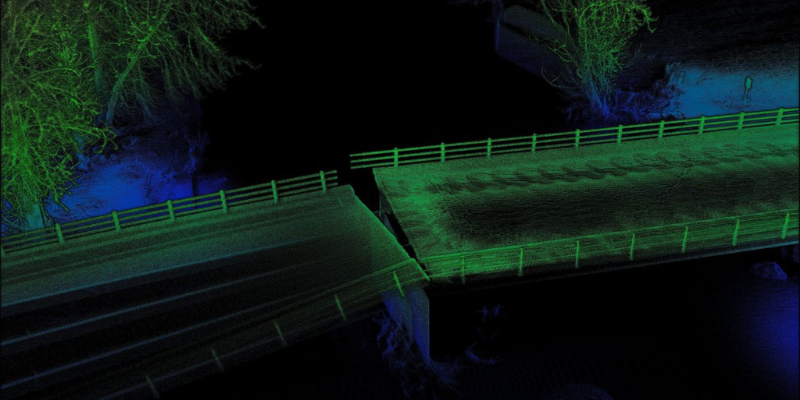
What Does LiDAR Stand For? Everything You Need To Know About Light Detection And Ranging
In recent years, LiDAR technology has emerged as a powerful tool across various industries, revolutionising everything from surveying and mapping to autonomous vehicles and environmental monitoring. But what exactly is LiDAR, and how does it work? This blog dives deep into the world of LiDAR, explaining its underlying principles, different types, and applications, and why […]

The Pathfinder Program: Drones And Nuclear Power
UK Drones Pathfinders Programme announces new pathfinder focused on detecting marine activity near nuclear power stations On 22nd July 2020, the UK Drones Pathfinder Programme announced that they would be adding a new pathfinder programme project which focussed on detecting marine activity at an early stage, particularly when the activity is near nuclear power stations. […]

Drone Data And Climate Change
Drones for Good: Drone Data And Climate Change The impact of global warming on a broad variety of communities has been well-documented, highlighted and forecast. However, there are specific parts of the world where predictions to mitigate the risks of global warming are made more challenging by changing temperatures, difficult terrain and environmental complexities. One […]