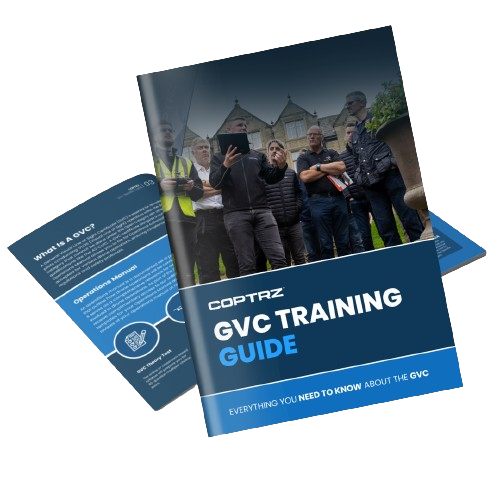
RPC-L1 Is the New Baseline for Specific Category VLOS in the UK
The CAA’s RPC-L1 certificate is now the Level 1 competence standard for pilots carrying out Specific Category VLOS operations in the UK. This article sets out what RPC-L1 actually covers, how long it lasts, how it sits next to the GVC, and why operators should treat it as a foundation for the direction the market is moving in, not just another certificate to file away.
What RPC-L1 Actually Covers
If you strip away the noise, the CAA’s position on RPC-L1 is consistent and straightforward. The certificate covers Specific Category operations, requires a UK Flyer ID, is VLOS only, has no minimum age, and is valid for five years. The CAA has also stated that the GVC and RPC-L1 are broadly similar in the level of competency needed to attain them, which is important context. RPC-L1 is not a dramatic reinvention of remote pilot competence. It is a rebuilt baseline inside a clearer, risk-matched framework.
That framework went live in early 2025, when the CAA introduced the new Remote Pilot Certificates, and it was followed by the launch of UK SORA on 23 April 2025. Placed in that wider picture, RPC-L1 is the entry point to a structured progression that runs through RPC-L2 and upwards, rather than a one-off qualification.
The Currency and Validity Rules That Bite
RPC-L1 is not a certificate you earn and forget. The current consolidated UK Regulation (EU) 2019/947 text sets a live-flight currency expectation of at least two hours within the previous 90 days, and the certificate itself is valid for five years. In other words, the CAA’s model is about maintaining demonstrable, usable competence over time, not collecting a single pass mark.
That matters operationally. Pilots who let their flight currency lapse, or who cannot evidence recent hours if asked, will find it difficult to justify continued commercial work under an Operational Authorisation that relies on RPC-L1 as the minimum competence. A serious operator treats currency tracking, flight logging and certificate expiry dates as routine operational data, not paperwork that can be reconstructed at the last minute.
Why This Is a Commercial Issue, Not Just a Training One
For years, a large part of the UK market was built around a simple shorthand. Someone either “had a GVC” or did not. That shorthand is now weakening. The better commercial question is whether a pilot’s competence is genuinely matched to the operation being proposed, and whether the surrounding operating structure can prove it.
RPC-L1 pushes the market towards that more precise conversation. It gives clients, procurement teams and insurers a cleaner reference point for what Specific Category VLOS competence actually looks like under the current CAA model. For buyers, that means tighter due diligence. For suppliers, it means the ability to evidence RPC-L1, currency and authorisation fit is now part of how credibility is earned.

Why the GVC Transition Is Driving the Change
The GVC is not dead, but the direction of travel is explicit. The CAA has confirmed that new GVC issuance will end on 31 December 2027. After that date, new training and assessment at those levels will sit inside the RPC framework, with RPC-L1, RPC-L2 and RPC-L3 as the available routes.
Operators who wait until late 2027 to act are taking an unnecessary risk. Training schedules, assessment slots and internal planning cycles will all tighten as the deadline approaches. A measured move towards RPC-L1 now, while the market still has capacity, is stronger operational planning than a last-minute scramble.
Treating RPC-L1 as a Foundation, Not a Finish Line
One of the most useful ways to read RPC-L1 is as the first strategic layer in a competence plan, not the whole plan. Coptrz’s own guidance positions RPC-L1 as the foundation of a tiered pathway towards more advanced competence, and that reading aligns with the wider CAA logic of matching pilot competence to growing operational complexity.
For a growing drone operation, that framing is more useful than a narrow pass-the-course mindset. It lets leaders plan pilot development, BVLOS ambition and internal governance as a single capability programme, rather than as a series of disconnected training purchases.
FAQs
No. The CAA has stated that the GVC and RPC-L1 are broadly similar in the level of competency required, but they are separate certificates issued under different parts of the framework. RPC-L1 is the CAA’s new Level 1 certificate for Specific Category VLOS operations, while the GVC will stop being issued to new applicants on 31 December 2027.
RPC-L1 is valid for five years from the date of issue. In addition to the five-year validity, holders need to maintain live-flight currency of at least two hours in the most recent 90 days to continue operating under the certificate’s privileges.
You need an appropriate remote pilot competence for the category of operation. For most Specific Category VLOS work under a standard Operational Authorisation, that competence will be evidenced by RPC-L1 or a valid GVC. The Operational Authorisation itself states the minimum remote pilot competence required for each operation.
RPC-L1 covers Specific Category VLOS only and has no minimum age. RPC-L2 covers VLOS and BVLOS operations inside ARC-a where no other air traffic is expected, requires the holder to be at least 18, to already hold RPC-L1, and to have at least 50 logged flight hours in the Specific Category before further training.
Final Thoughts
The mistake is to read RPC-L1 as just a new name for the GVC. The better reading is that it is the baseline competence layer for a UK market moving towards more explicit, risk-matched operating standards. The operators who understand that early will look more credible to clients, plan their training pipeline more calmly, and scale more cleanly as the framework tightens.
For advice on moving to RPC-L1, planning your team’s progression, or matching pilot competence to the operations you are tendering for, contact the Coptrz team at [email protected] or on 0330 111 7177.
Download Our FREE RPC-L1 Guide
Understand everything you need to know about moving towards commercial drone operations with our RPC-L1 guide.
- Understand what RPC-L1 is and who it is for
- Learn how the CAA transition impacts operators and training routes
- Get a clear breakdown of requirements, costs and next steps
Related Posts
Pix4Dmapper Version 3.3 Released
Pix4D’s rayCloud is an iconic interface that connects original images to the 3D reconstruction. Add and edit your ground control and manual tie points to improve your project accuracy without searching for each point in an endless list of images. Simply select the point’s approximate location in the point cloud and refine its position in […]

OFQUAL 5: Chief Pilot Training course
Take your drone training to the next level with OFQUAL 5 Chief Pilot Training As we’ve discussed in the past, if you want to operate drones on a commercial basis in the UK you need a Permission for Commercial Operations (PfCO) – typically delivered via a three or four-day course from a National Qualified Entity […]
3 Sectors Set to be Transformed by Commercial Drones: #1 Surveying
Any business looking to stay ahead of the competition make it their mission to leverage the latest technological innovations. Commercial drones are one such innovation being discussed in boardrooms and offices around the world as business leaders continue to look for ways to use technology to improve their bottom line. Over the next few weeks, […]