If your organisation flies drones, pilot competence is not just a pilot issue. It is a leadership issue.
The accountable manager or operational leader does not need to be the best pilot in the organisation. But they do need to know whether the organisation has the right pilots, with the right competence, operating under the right authorisation, with the right records.
That is where RPC-L1 becomes more than a certificate.
The CAA’s guidance for organisations flying drones for work states that organisations must ensure remote pilots have the necessary qualifications and competency, applicable Operational Authorisations and insurance. It also says the accountable manager is responsible for making sure the organisation operates drones safely and legally.
That is a clear governance signal.
The accountable manager’s real question
The question is not:
“Have the pilots done a course?”
The real question is:
“Can we prove our pilots are competent, current and authorised for the operations we are conducting?”
That changes the conversation.
It moves RPC-L1 from training admin to operational governance.
Why RPC-L1 belongs on the leadership agenda
RPC-L1 is relevant to leadership because it affects:
- Legal compliance
- Operational continuity
- Client trust
- Tender evidence
- Insurance confidence
- Safety performance
- Workforce planning
- Future progression into more advanced operations
If the business relies on drones, competence risk is business risk.

What leaders should know about RPC-L1
The CAA describes RPC-L1 as having Part A for VLOS and optional Part B for BVLOS with Visual Mitigations. RPC-L1 requires a Flyer ID and is valid for five years.
Leaders do not need to memorise every syllabus detail, but they should understand:
- What RPC-L1 Part A allows
- What it does not allow
- Which pilots hold it
- Which pilots rely on GVC
- Which OAs require it
- Which future operations may need Part B, RPC-L2 or RPC-L3
- How competence records are maintained
The risk of delegating too far down
Many organisations leave drone competence to the pilots.
That works until:
- A key pilot leaves
- A certificate expires
- A client asks for evidence
- A tender requires competence detail
- An incident triggers scrutiny
- A new site requires different controls
- A future BVLOS project exposes missing logged hours
At that point, leadership discovers the issue too late.
Build a leadership-level competence dashboard
A simple dashboard should show:
- Number of active pilots
- Number holding RPC-L1 Part A
- Number holding GVC
- Certificate expiry dates
- Pilots requiring conversion
- 90-day flight activity status
- Aircraft category coverage
- Operational Authorisations covered
- Training gaps
- Future progression candidates
This should be reviewed monthly in any serious drone operation.
Link RPC-L1 to the Operations Manual
The CAA’s PDRA01 Operations Manual guidance says the manual must include qualification, role training, currency and competency. It also includes logs and records, site survey forms, pre-flight briefing forms and occurrence reporting.
That gives accountable managers a practical standard.
If your Operations Manual says pilots must be trained, current and competent, your evidence system must prove it.
Why Coptrz is useful at leadership level
Coptrz can help leaders move from certificate purchasing to capability planning.
That includes:
- Identifying who needs RPC-L1
- Supporting GVC transition
- Advising on progression routes
- Supporting training delivery
- Linking training to operational readiness
- Helping teams understand the evidence expected around drone operations
The value for leaders is confidence that training decisions match the operating reality.
FAQs
The CAA states the accountable manager is responsible for making sure the organisation operates drones safely and legally. Organisations must ensure pilots have necessary qualifications and competency.
Not necessarily, unless they are also acting as a remote pilot. But they should understand how RPC-L1 fits the organisation’s competence framework.
Certificates, expiry dates, Flyer IDs, aircraft categories, flight currency, role training, OA scope and training gaps.
It may be legally enough for a small operation, but commercially it can create a single point of failure.
If drones are material to revenue, safety or operational delivery, pilot competence should be visible at leadership level.
If you are accountable for drone operations, Coptrz can help you turn RPC-L1 training into a clear governance plan, covering pilots, records, authorisation alignment and future progression.
Author bio:
Simon Harris is Managing Director of Coptrz, helping UK organisations build safer and more commercially mature drone operations.
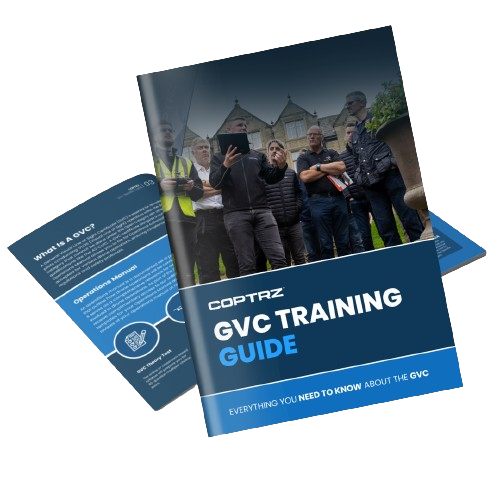
Download Our FREE RPC-L1 Guide
Understand everything you need to know about moving towards commercial drone operations with our RPC-L1 guide.
- Understand what RPC-L1 is and who it is for
- Learn how the CAA transition impacts operators and training routes
- Get a clear breakdown of requirements, costs and next steps
Related Posts

WingtraOne over Ladybower
Thinking of upgrading your current aircraft model to a WingtraOne Fixed Wing? Check out our Wingtra trade-in scheme and save up to £3,900 on a brand new drone. On the hottest day of 2019 so far the COPTRZ team took the WingtraOne PPK Fixed Wing VTOL Drone down to Ladybower Reservoir for a product […]
Why use drones to survey your mines?
The mining industry was one of the first industries to see the benefits of drone technology, with early UAVs being used to inspect hazardous conditions, reducing the risk of injury. But drone technology has moved on significantly over the past five years. Today’s drones are capable of much more than the simple collection of visual […]
How are Drones Used In Surveying?
5-10 minute read The use of drones in the survey and construction sectors has come a long way and the capabilities of those very drones has seriously improved, with many organisations now adopting professional drone surveying services to streamline data capture and analysis. Your choice of sensors, surveying software and drone can have a huge […]