At the heart of the evolution of modern warfare and defence strategy lies the growing role of military drone reconnaissance. Military reconnaissance drones often referred to as Intelligence, Surveillance, and Reconnaissance (ISR) drones are specifically engineered to meet the exacting standards of the armed forces. These platforms integrate imaging sensors, long-endurance flight capabilities, and secure communication systems to deliver real-time intelligence directly to command centres and field units. According to Grand View Research, the military drone market in the United Kingdom (UK) is expected to reach ~ £3.52 billion by 2030, reflecting the nation’s increasing investment in autonomous aerial systems for both tactical and strategic operations. In complicated operational environments, ISR drones improve situational awareness by combining surveillance, mapping, and analytical tasks.
In 2025, these systems have become indispensable assets to the UK’s defence ecosystem. Organisations such as the Royal Marines, Defence Infrastructure Organisation, and United Kingdom Special Forces (UKSF). These already utilise advanced drone solutions supplied by COPTRZ. Read on to learn more about the tactical applications that define military drone reconnaissance today.
Tactical Applications
Military drones assist in intricate terrain mapping, mission planning, and precise target identification, significantly improving the accuracy and efficiency of tactical responses. Drone reconnaissance technology has become the backbone of tactical awareness, it delivers instant intelligence while ensuring both safety and strategic precision. The UK’s defence sector has embraced these systems not only for surveillance and intelligence but also for creating a connected ecosystem of air and ground robotics. Below are the key tactical applications for military drone reconnaissance in 2025.
Indoor Tactical Reconnaissance
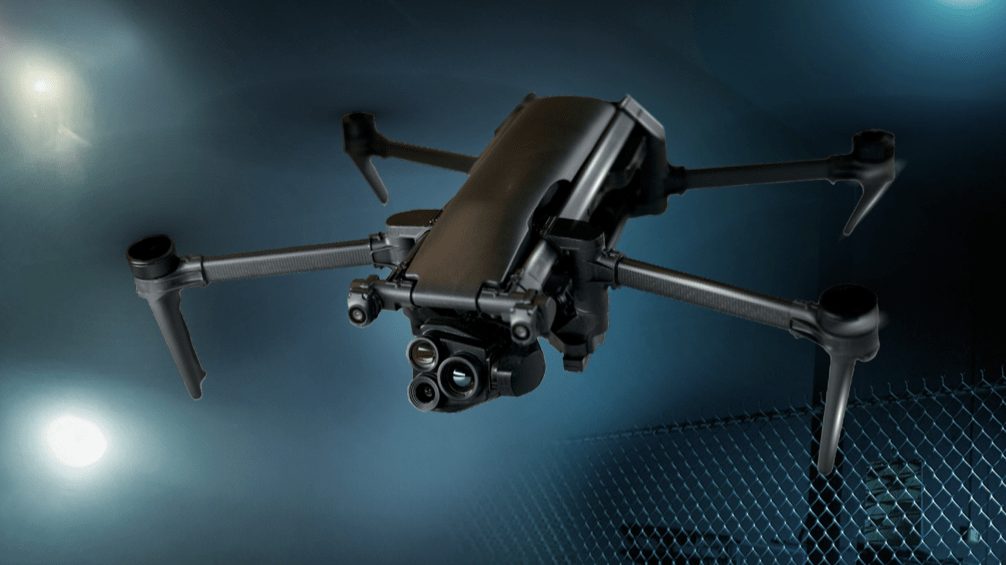
Operations in confined or Global Positioning System (GPS)-denied environments, such as buildings or tunnels, require precision, resilience, and speed and this is where the Sky Hero Loki MkII stands out. This compact tactical quadcopter is specifically engineered for short-range reconnaissance in dark, obstacle-rich indoor settings, where traditional aerial assets cannot operate effectively.
Deployed by many tactical teams worldwide, the Loki MkII has become a trusted partner for special operations and counterterrorism units. Its impact-resistant frame ensures durability under harsh conditions, while the forward-facing day/night camera provides crystal-clear visuals even in complete darkness. Equipped with 3D computer vision-based positioning, the drone can maintain stable flight and precise hovering without relying on GPS, a critical advantage in subterranean or urban environments.
For field teams, the Loki MkII’s intuitive piloting system, real-time telemetry, and secure encrypted communication enhance both safety and mission effectiveness. Its ability to deliver instant situational awareness before troops enter a room or corridor significantly reduces risk, turning it into a vital component of modern indoor reconnaissance.
Outdoor Tactical Reconnaissance
Complementing indoor reconnaissance platforms, the Parrot ANAFI UKR extends military intelligence capabilities into complex outdoor environments. Purpose-built for defence, government, and public safety operations, the Parrot ANAFI UKR is a sovereign ISR micro-UAV designed to operate securely and effectively, even in Global Navigation Satellite System (GNSS)-denied or jammed areas. Its optical navigation and 5G/MARS/LoRa multi-radio system ensure uninterrupted communication across ranges of up to 20 km, making it a reliable tool for real-time situational awareness in contested zones.
Weighing less than 1.5 kg with a 38-minute endurance, it offers remarkable agility and endurance while maintaining a low acoustic signature (77 dBA) for discreet operations. The drone’s dual EO/IR imaging system, featuring a FLIR Boson thermal sensor and a 21 MP visible camera, enables operators to capture high-resolution data both day and night. Its 35x digital zoom and 3-axis hybrid gimbal deliver stable, detailed intelligence for surveillance, target tracking, and perimeter security. Engineered for cybersecurity and data sovereignty, the ANAFI UKR employs AES 256 and 512-bit encryption, FIPS140-2–compliant firmware, and allows all data to be stored privately on encrypted SD cards or shared only via secure European servers. Fully deployable in under two minutes, it is IP53-rated for rain and dust resistance, and can take off directly from the operator’s hand, ideal for rapid-response missions.
With its combination of secure communications, multi-spectral imaging, and autonomy in satellite-denied environments, the Parrot ANAFI UKR represents a new generation of field-ready reconnaissance drones, supporting the UK’s commitment to technologically sovereign, data-secure aerial intelligence in modern defence operations.
Extended Surveillance and Sentry Operations
Beyond rapid reconnaissance, drones are also being integrated into persistent surveillance and sentry roles. By hovering discreetly or holding position for extended periods, these UAVs can monitor perimeters, detect movement, and capture audio-visual intelligence without direct operator intervention. In tactical overwatch missions, drones provide continuous observation of key entry points, supply routes, or encampments. This “eyes-on” capability allows security teams and commanders to maintain an unbroken line of situational awareness, enabling faster responses to evolving threats. Combined with autonomous flight modes and real-time video feeds, these drones extend the reach and endurance of surveillance without increasing personnel risk.
Ground Support with Tactical Rovers
Complementing aerial reconnaissance, tactical ground rovers support military and first-response operations. These small, throwable robotic units can navigate confined spaces, collapsed structures, or hazardous zones where humans or drones cannot safely enter.
Last year COPTRZ secured a major contract with the UK Ministry of Defence (MoD) to supply Mobile Ground Sensors (MGS) as part of the Human Machine Teaming (HMT) framework, a £300 million initiative over three years. Managed by Defence Equipment & Support (DE&S) and the Future Capability Group (FCG), the programme is central to the British Army’s Robotic and Autonomous Systems (RAS) strategy. The MGS units, developed for the Expeditionary Robotics Centre of Expertise (ERCoE), are soldier-portable, rapidly deployable, and networked, capable of day and night reconnaissance in complex terrain where aerial drones face limitations. This initiative contributes to the Defence Integrated Review (IR) 2025, gathering critical evidence for integrating robotic solutions across defence operations.
Together, drones and ground robots create a collaborative human-machine reconnaissance network, reducing exposure for soldiers while expanding the scope of intelligence collection.
Data Security and Mission Continuity
In the era of digital warfare, data integrity is as vital as operational accuracy. Every tactical drone and rover deployed in the field transmits critical intelligence that must remain secure from interception or tampering. To ensure this, all communications within military drone systems are protected by military-grade encryption protocols, safeguarding mission data and ensuring seamless continuity even in contested or jammed environments.
Secure data transmission also supports real-time command coordination. Encrypted video and telemetry links allow command centres to monitor operations, assess threats, and issue decisions instantaneously, maintaining control even in rapidly evolving situations. This security-first approach ensures that mission-critical intelligence flows safely from field teams to leadership, preserving the integrity of national defence networks.
Integrated Reconnaissance Ecosystem
Perhaps the most important development in 2025 is the emergence of an integrated reconnaissance ecosystem. Rather than treating air and ground assets as separate systems, the UK’s defence strategy now focuses on interconnected intelligence platforms combining drones, rovers, sensors, and command software into one unified operational network.
This ecosystem approach allows for seamless data sharing between different assets. Aerial drones can relay imagery and positioning data to ground rovers, while fixed or mobile command units can fuse these data streams into actionable intelligence. The result is a multi-layered situational picture that enhances mission planning, threat assessment, and real-time tactical response.
Command Support and Decision Superiority
At the strategic level, the true power of military reconnaissance drones lies in their ability to support command and control functions. High-resolution imagery, live video feeds, and sensor data streamed from the field enable commanders to make rapid, informed decisions. Whether it’s identifying enemy positions, assessing damage, or adjusting troop movements, these insights directly influence mission success.
This constant flow of real-time intelligence shortens the “sensor-to-decision” timeline, the time between detecting a threat and responding to it, giving military forces a decisive tactical edge. In essence, drones are not just tools of observation; they are instruments of information dominance.
Conclusion
As the UK continues to invest in advanced ISR capabilities, the convergence of artificial intelligence, sensor fusion, and autonomous navigation will enhance what drones can achieve on the battlefield. In an era where information dominance is as critical as physical presence, military drone reconnaissance stands at the core of modern tactical superiority, ensuring that armed forces maintain agility, precision, and foresight in every mission.
COPTRZ’s prime solutions undergo rigorous testing and have received approval from the UK Ministry of Defence. They are Blue sUAS certified, National Defence Authorisation Act compliant, and part of verified MoD supply contracts following thorough verification and validation processes.
Speak to the COPTRZ team today on 0330 111 7177 or email sam.denniff@coptrz.com / sales@coptrz.com to learn more.
Download our FREE GVC Training Guide
Learn everything you need to know about becoming a drone pilot with our GVC training guide.
- Get a full course roadmap to understand every step of the journey
- Contains clear answers to all of the frequently asked questions
- Get a transparent and comprehensive breakdown of course costs

Related Posts
Introducing our Partnership with Wingtra…
Coptrz are proud to announce our strategic brand partnership with Wingtra Coptrz and Wingtra – the Swiss-based VTOL fixed-wing drone manufacturer – have announced a new agreement with COPTRZ becoming the first Premium Partner in Europe. Coptrz and Wingtra began working together in 2017 and has been expanding their footprint in the UK market ever […]
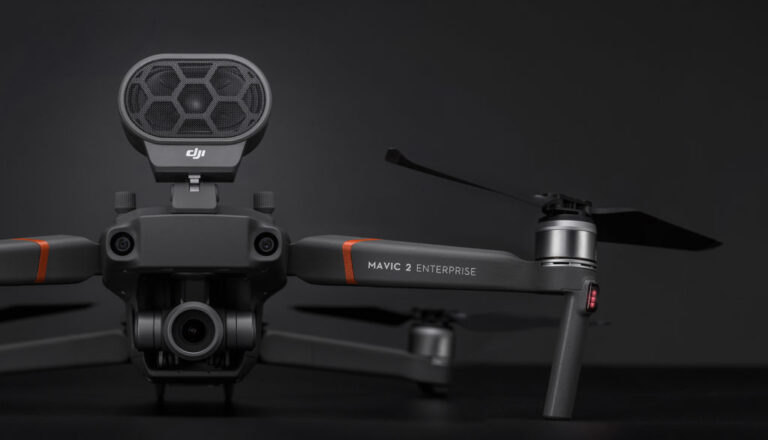
An In-Depth Look at the Mavic 2 Enterprise
When the original Mavic drone was launched back in 2016, it was marketed as a high-end consumer drone. But the platform’s ease of use, extensive payload options and affordability meant it found popularity in a number of industries including construction, surveying and search and rescue. So when DJI launched the updated Mavic 2 Zoom and […]

DJI NEWS: Report on DJI Data Security Released
Last week, DJI released a report from a third-party investigation into DJI data practices. DJI’s storage, collection and use of data from their drones, software and services were under the microscope. This concluded in DJI having full control of these areas. The third-party was Kivu Consulting, based in San Francisco, and they focussed on DJI’s […]