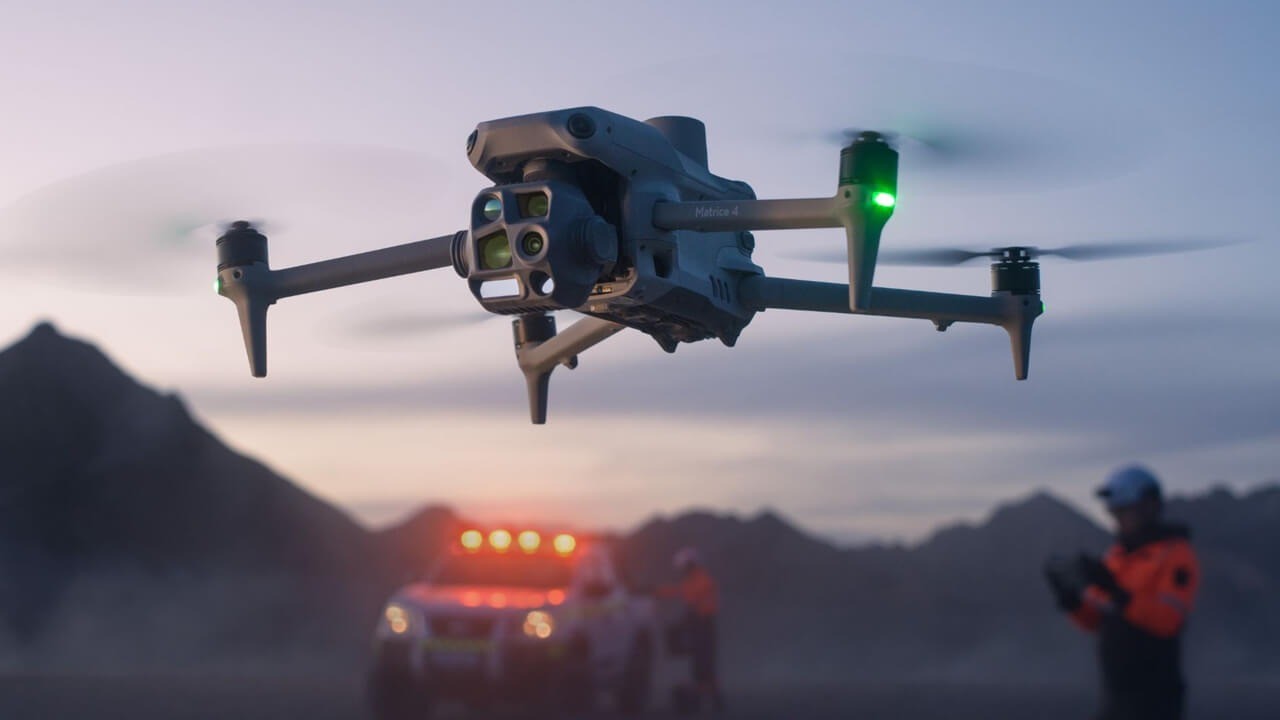
In the realm of public safety operations, deploying drones equipped with advanced capabilities can significantly enhance situational awareness and response effectiveness.
DJI‘s Matrice 30 Series and Matrice 4 Series are two prominent offerings tailored for such demanding applications.
This article provides a comparative analysis of these two drone series, focusing on their specifications and suitability for public safety missions.
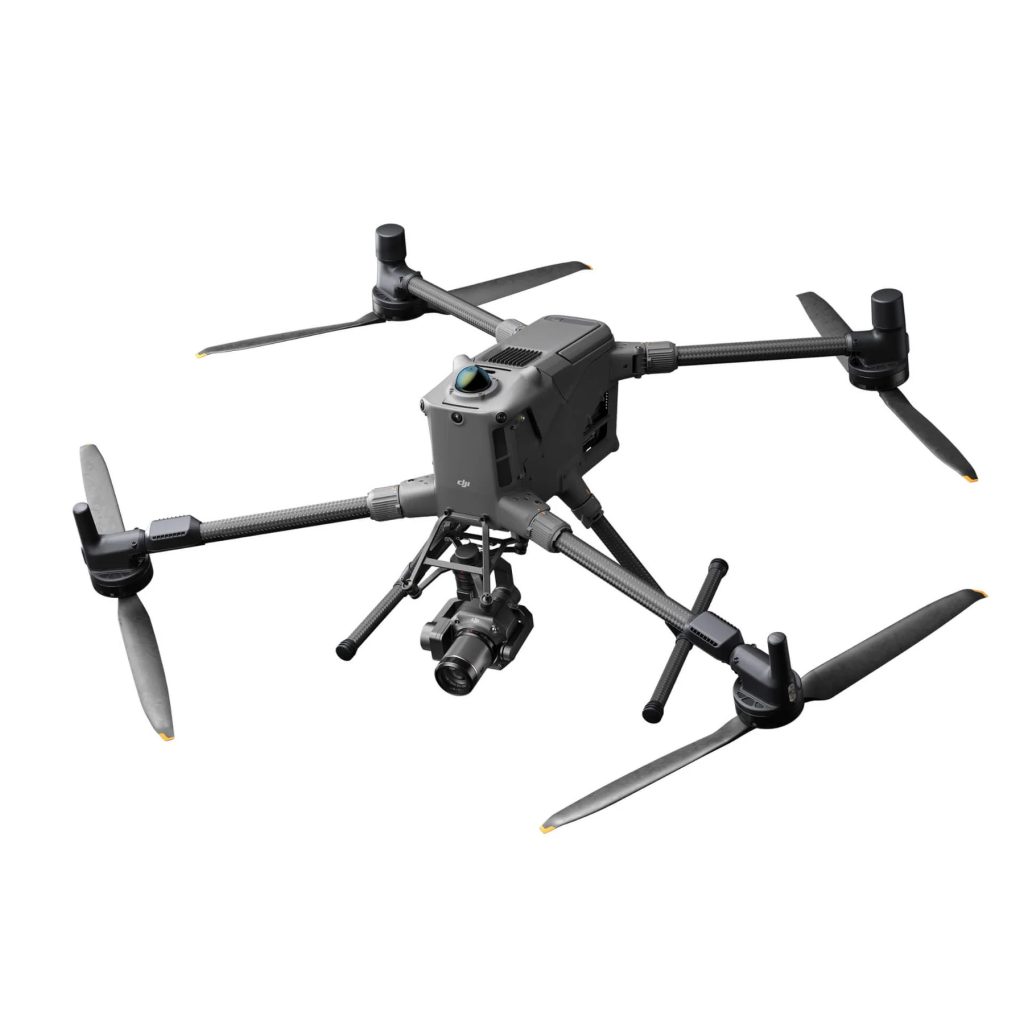
DJI Matrice 30 Series
The Matrice 30 Series is engineered for versatility and portability, making it a reliable choice for rapid deployment in various environments.
Key features include:
- Integrated Multi-Sensor Payload: The M30 model combines wide-angle and zoom cameras with a laser rangefinder, while the M30T adds a thermal imaging camera, enhancing its utility in low-visibility conditions.
- Environmental Resilience: With an IP55 protection rating, the M30 Series withstands adverse weather conditions and operates effectively in temperatures ranging from -20°C to 50°C.
- Enhanced Flight Performance: The drones offer a maximum flight time of 41 minutes, a top speed of 23 m/s, and can operate at altitudes up to 7,000 meters, providing extensive coverage during critical missions.
- Safety Features: Equipped with dual-vision and Time-of-Flight (ToF) sensors on all six sides, the M30 Series ensures obstacle detection and avoidance, bolstering operational safety.
DJI Matrice 4 Series
Introduced as a new generation of intelligent drones, the Matrice 4 Series comprises the Matrice 4T and Matrice 4E models, each designed with specific operational focuses:
- Advanced Imaging Systems:
- Intelligent Features: Both models incorporate AI capabilities for object detection and tracking, enhancing efficiency in locating subjects during emergency responses.
- Operational Efficiency: With a maximum flight time of up to 49 minutes and advanced transmission systems, the Matrice 4 Series supports extended missions with reliable connectivity.
Suitability for Public Safety Applications
Both drone series offer capabilities beneficial to public safety operations:
- Matrice 30 Series: Its compact design and robust environmental adaptability make it ideal for rapid deployment in diverse scenarios, including search and rescue missions in challenging terrains and weather conditions.
- Matrice 4 Series: The advanced imaging systems and AI-driven features of the Matrice 4T enhance its effectiveness in complex search and rescue operations, particularly in low-light or night-time conditions. The Matrice 4E’s high-precision cameras are well-suited for detailed mapping and inspection tasks, aiding in disaster assessment and infrastructure monitoring.
Conclusion
Selecting between the DJI Matrice 30 Series and Matrice 4 Series depends on specific operational requirements. The Matrice 30 Series offers portability and resilience for quick-response scenarios, while the Matrice 4 Series provides advanced imaging and intelligent features for detailed analysis and extended missions. Public safety agencies should assess their mission profiles to determine which drone system aligns best with their operational needs.
Download our FREE GVC Training Guide
Learn everything you need to know about becoming a drone pilot with our GVC training guide.
- Get a full course roadmap to understand every step of the journey
- Contains clear answers to all of the frequently asked questions
- Get a transparent and comprehensive breakdown of course costs

Related Posts
Parrot Anafi Thermal – the ultimate compact thermal inspection drone
Parrot Anafi Thermal In years gone by even considering having a thermal team as part of your everyday inspection crew might have seemed like something of a luxury item. With expensive equipment coupled with the demand for specialist training, having access to this crucial data might have been considered too much of a stretch for […]

The 5 Best Applications For Fixed-Wing Drones
Thinking of upgrading your current aircraft model to a WingtraOne Fixed Wing? Check out our Wingtra trade-in scheme and save up to £3,900 on a brand new drone. What are fixed-wing drones and when should you use them? When most people think about fixed-wing drones, they think about huge military UAVs with the bombing capacity […]

Helping The Homeless: Drones For Good
Helping The Homeless: Drones For Good In Britain, the Covid-19 pandemic has cast a light on many societal issues right on our doorsteps. One of these severe social failings has been the care of our homeless community. With the country on lockdown, our homeless, the often forgotten, needed our focus and direct action. In this […]