From 1 January 2026, the UK Civil Aviation Authority (CAA) will implement significant regulatory changes to the Open Category, including new class markings and the integration of Remote ID requirements. For holders of the A2 Certificate of Competency (A2 CofC), these changes are particularly positive offering expanded operational privileges without the need for additional training or applications.
These updates form part of the CAA’s modernised framework for safer, smarter, and more flexible drone operations.
Why the Changes Matter
The UK’s airspace is becoming increasingly complex, with drones now operating alongside manned aircraft, emergency services, and infrastructure inspection systems. The CAA’s regulatory refresh establishes clear product standards via UK class marks (UK0–UK6) and introduces Remote ID, ensuring accountability and traceability of drones in flight.
A class mark is a product label that shows a drone meets UK standards. UK2 (or C2 in the EU) is the mark applied to certain drones up to 4 kg with added safety features. A legacy drone is one sold before 1 January 2026 with no UK class mark.
For A2 CofC holders, this transition brings enhanced freedoms and practical advantages, reflecting the CAA’s confidence that trained pilots can operate safely closer to people in urban and built-up environments.
What Changes for A2 CofC Holders
From 2026, A2 CofC holders will automatically gain access to new operational privileges without re-training. These include:
1. Continued Use of Legacy Drones (< 2 kg)
Legacy drones (meaning drones purchased before 1 January 2026 without a UK ‘class mark’) can continue to fly within the Near People (A2) subcategory, provided:
- The aircraft weighs under 2 kg.
- The pilot holds a valid A2 CofC.
- A 50-metre horizontal separation from uninvolved persons is maintained.
This ensures your existing fleet remains usable beyond 2026. Without an A2 CofC, those same drones would default to the Open A3 Category (well away from people and 150 m from residential, commercial, industrial or recreational areas).
2. New Privileges with UK2 Drones
UK2-marked drones (or EU C2 drones recognised until 31 December 2027) can weigh up to 4 kg and feature enhanced safety systems. When flown by an A2 CofC holder, these aircraft unlock new proximity allowances:
- 30 metres horizontal separation in normal mode.
- 5 metres separation in low-speed mode, provided the drone is equipped and configured accordingly.
This effectively allows A2 CofC pilots to perform close-range operations, such as roof surveys or event filming, previously restricted to Specific Category authorisations.
3. End of Transitional A1 Privilege (250–500 g Drones)
The current “A1 Transitional” allowance, which permits A2 CofC holders to fly 250–500 g legacy drones close to people in the A1 category, expires on 1 January 2026. After this date, these drones will revert to standard A2/A3 rules, requiring either:
- A2 CofC + 50 m separation (A2 rules), or
- A3 operation (150 m from residential, commercial, or recreational areas).
Sub-250 g drones remain within Over People (A1) rules and are unaffected.
Practical Examples: What You Can Do in 2026
Urban filming: Operate a UK2 drone with your A2 CofC in town and city environments at 30 metres from uninvolved people, or reduce to 5 metres when correctly configured in low-speed mode. This enables dynamic shots in built-up areas without a CAA Operational Authorisation, provided you do not overfly uninvolved people.
Roof and façade inspection: Use a UK2 aircraft to conduct close-in roof, guttering and façade surveys in residential or commercial streets within A2 limits. Where you are using a legacy sub-2 kg aircraft without a class mark, maintain 50 metres from uninvolved people.
Legacy fleet utilisation: Keep value in older platforms. If the aircraft is under 2 kg and has no class mark, you may continue to fly in A2 at 50 metres with a valid A2 CofC.
Even with these expanded freedoms, safety principles remain unchanged:
- Do not overfly uninvolved people or crowds. “Near people” never means “over people.”
- Keep your A2 CofC current. It is valid for five years.
- Use low-speed mode correctly. Only reduce to 5 metres when your aircraft supports it, is configured for it, and conditions permit.
- Remote ID. From 2026 there are Remote ID requirements for certain class-marked drones. Enable and use Remote ID where applicable to your aircraft and operation.
- Plan conservatively. Complete a pre-flight assessment, select launch and recovery points that preserve separation, and increase distances where practicable.
- Stay within Open Category limits. Maintain VLOS, observe the 120 m AGL altitude limit unless operating on a slope in line with the Drone Code, and comply with local restrictions or landowner conditions.
Why the A2 CofC Remains a Smart Investment
The A2 CofC will continue to be the most efficient qualification for legitimate, safe, and flexible Open Category operations.
- Quick and Accessible: Complete online self-study and a simple multiple-choice theory exam, no flight test required.
- Cost-Effective: One-time training investment valid for five years with no yearly CAA application fee.
- Simple Renewal: You can renew your A2 CofC up to six months before expiry, ensuring continuous currency and avoiding any interruption to your flying privileges.
- Recognised Competency: Demonstrates your ability to manage risk and operate near people safely, opening commercial-grade opportunities within Open Category limits.
Specific Category operations (requiring a GVC or Remote Pilot Certificate and CAA Operational Authorisation) involve complex documentation, audits, and annual renewals. For most photographers, surveyors, and content creators, the A2 CofC offers all the access needed to conduct safe, lawful flying without the paperwork.
The A2 Certificate of Competency remains a key tool of responsible drone flying in the UK. 2026 will unlock greater operational freedom for A2 CofC holders. Don’t miss out, get or renew your A2 CofC with Coptrz today and make the most of the new Open Category privileges.
Download our FREE GVC Training Guide
Learn everything you need to know about becoming a drone pilot with our GVC training guide.
- Get a full course roadmap to understand every step of the journey
- Contains clear answers to all of the frequently asked questions
- Get a transparent and comprehensive breakdown of course costs

Related Posts

The agricultural landscape is evolving, and drones are leading the charge.
Drones are revolutionising agriculture, transforming traditional practices into data-driven, precision-oriented operations. Beyond mere automation, they are becoming indispensable tools for enhancing productivity, sustainability, and profitability in farming. 1. Precision Spraying: Enhancing Efficiency and Safety Modern agricultural drones equipped with advanced spraying systems enable targeted application of fertilisers and pesticides. This precision reduces chemical usage, minimises […]
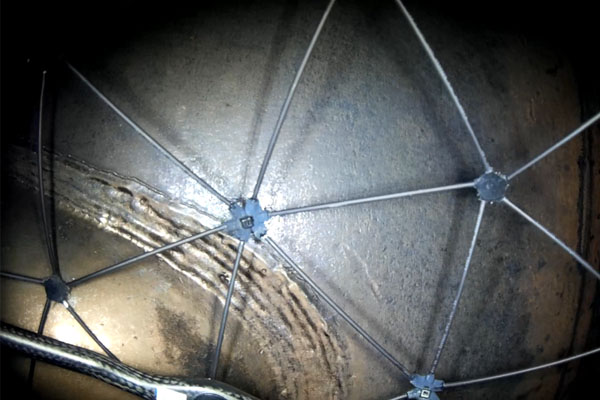
Flyability Elios: Inspection of a Pulp & Paper Mill Tank
Pulp, which is the raw material used in the manufacture of paper, is prepared by chemically or mechanically separating cellulose fibres from wood, fibre crops or waste paper. At an industrial scale, this process is performed in large tanks that need recurrent inspections. Customer Needs One of Europe’s leading manufacturer of pulp and paper possesses […]
DJI Matrice 210 RTK – Widening the Horizons for Drones in Surveying
Surveying is a big opportunity for drone operators. But until now, development in the sector has been hampered by a lack of drones built specifically for that market. Enter the Matrice 210 RTK: the latest addition to the Matrice 200 Series. It’s built for surveying, construction and similar industries, with additional features that make it […]